
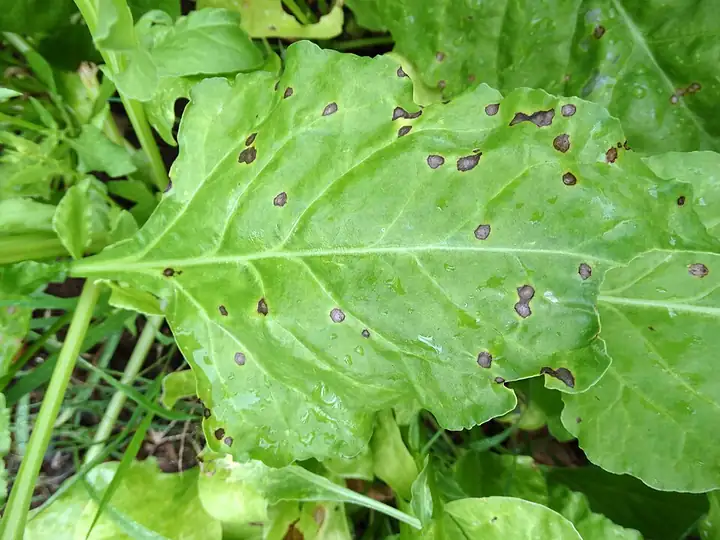
Cercospora leaf spot
Fungus (Cercospora beticola on beets, Swiss chard and spinach; other Cercospora species attack other crops such as pepper)
| Type | Fungus |
|---|---|
| Cause | Fungus (Cercospora beticola on beets, Swiss chard and spinach; other Cercospora species attack other crops such as pepper) |
| When | Mid to late summer in warm, humid weather. |
About
Cercospora leaf spot spots and kills the leaves of beets, Swiss chard and spinach. It is worst in warm, humid summers with long nights of leaf wetness.
Also called Cercospora leaf spot
How to recognize it
Symptoms
Small round spots with pale brown to off-white centers and reddish-purple edges appear on older leaves. Spots grow, merge and turn gray as spores form, tiny black dots may show in the centers, and badly spotted leaves yellow and die.
Worse when
Humid weather at 75 to 85°F, and leaves that stay wet overnight.
How it spreads
Spores move by rain splash, wind, irrigation, insects, people and tools; the fungus survives up to two years in crop debris and also on weeds and seed.
When
Mid to late summer in warm, humid weather.
What to do, gentlest first
Prevention works best; most sprays only protect healthy leaves and can't cure infected ones. Always read and follow the product label.
Clean seed and resistant varieties Prevent
Start with certified disease-free seed and choose resistant varieties where offered.
Rotate and space plantings Prevent
Rotate away from beets, chard and spinach for two to three years, and do not put new succession plantings right next to older, spotted ones.
Water so leaves dry Prevent
Use drip irrigation or water at midday so leaves do not stay wet overnight.
Clean up debris By hand
Remove badly spotted leaves, and bury or remove crop debris after harvest; destroy volunteer plants and weeds.
Organic protectant fungicides Organic spray
UMass notes organic fungicide options exist; use one labeled for your crop and apply it preventively, before spotting gets severe.
Protectants only shield healthy leaves; they will not clear existing spots. Follow the label, including the days to wait before harvest.
Protectant fungicides Conventional spray
Conventional protectant fungicides labeled for beets, chard or spinach can slow the spread when started early. They will not clear spots already there.
Follow the label, including which crops it may be used on and how many days to wait before harvest.
Plants it affects
Arugula, Beet, Malabar spinach, Mustard greens, Pansy and viola, Pepper (sweet and chili), Sesame, Spinach, Swiss chard
Sources
Photo: Photo: Scot Nelson, CC0, via Wikimedia Commons (CC0). Photo resized for the web.

Planting dates and advice are general guidance; check with your local Cooperative Extension office for your area.