
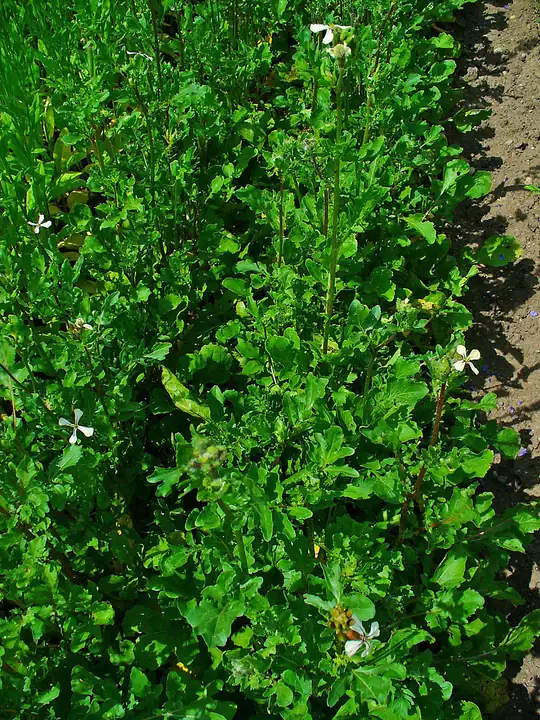
Arugula
Eruca vesicaria subsp. sativa · Cabbage family (Brassicaceae)
| Hardiness zones | 2 to 11 |
|---|---|
| Sun | full sun to part shade |
| Water | moderate |
| Life cycle | annual |
| Frost | Half-hardy: takes a light frost |
| Soil pH | 6.0–6.5 |
| Spacing | 3 to 6 inches |
| Days to harvest | 21 to 50 days |
About Arugula
Arugula (also called rocket) is a quick, peppery salad green in the cabbage family. It grows fast in cool weather, takes light frost, and is ready to pick in just a few weeks.
Grown as a cool-season annual in every zone; time it for the cool weather of spring or fall. Long days, heat and dry soil make it bolt quickly, so light shade helps in late spring.
When to plant
Timing is counted from your average last spring frost (and first fall frost). Sow & Tell works out the actual dates for your ZIP code.
- Fall planting: 4 to 9 weeks before the first fall frost
Days count from seeding: leaves can be picked when a couple of inches long, whole plants cut in 3 to 4 weeks, and plants mature in 40 to 50 days. In spring, sow several weeks before the last frost, then every 2 to 3 weeks.
Soil
Moist, well-drained soil; keep it evenly watered to slow bolting.
Use fertile, well-drained soil; follow a soil test before planting and keep soil pH about 6.0 to 6.5.
Feeding
- after you cut the plants: nitrogen fertilizer. A light side-dressing beside the row, watered in, helps new leaves grow back.
Harvest
Pick young leaves; older leaves turn bitter. Regular picking of small leaves helps delay flowering.
Pick outer leaves, or cut the whole plant an inch or two above the soil after 3 to 4 weeks and harvest the regrowth; regular picking also slows bolting. Sow again every 2 to 3 weeks for a steady supply.
Varieties (3)
Extension sources name very few arugula varieties. Texas A&M lists arugula at about 40 days without naming varieties.
| Variety | Type | Days | Notes |
|---|---|---|---|
| Astro | Garden arugula | A named garden arugula on Kansas State, Kentucky and UF/IFAS lists. | |
| Sylvetta | Wild arugula (Diplotaxis tenuifolia) | More pungent than garden arugula. A different species from garden arugula. It grows more slowly, about half as tall, and is slower to bolt, with smaller, deeply lobed leaves and yellow flowers. | |
| Speedy | Recommended in the Florida Vegetable Gardening Guide. |
Good neighbors
Cabbage, Broccoli, Kale, Cauliflower, Brussels sprouts, Collards, Kohlrabi
UMN Extension says arugula can serve as a trap crop that lures flea beetles away from other cabbage-family crops, working best in a mix of several trap species; expect the arugula itself to get chewed.
Pests to watch for
Flea beetles, Aphids, Bagrada bug
Diseases and problems
Cercospora leaf spot, Black rot of cabbage-family crops, Clubroot, White rust
In the kitchen
Eaten raw in salads and on pizza or sandwiches, or wilted into pasta.
Keeping it: Store arugula unwashed in the refrigerator, loosely covered with a damp paper towel, and use it within about a week.
Pets: Not listed as toxic by the ASPCA
Sources
- hort.extension.wisc.edu
- plants.ces.ncsu.edu
- hgic.clemson.edu
- warren.cce.cornell.edu
- extension.umn.edu
- aspca.org
- aspca.org
Photo: Photo: H. Zell, CC BY-SA 3.0, via Wikimedia Commons (CC BY-SA 3.0). Photo resized for the web.

Planting dates and advice are general guidance; check with your local Cooperative Extension office for your area.