
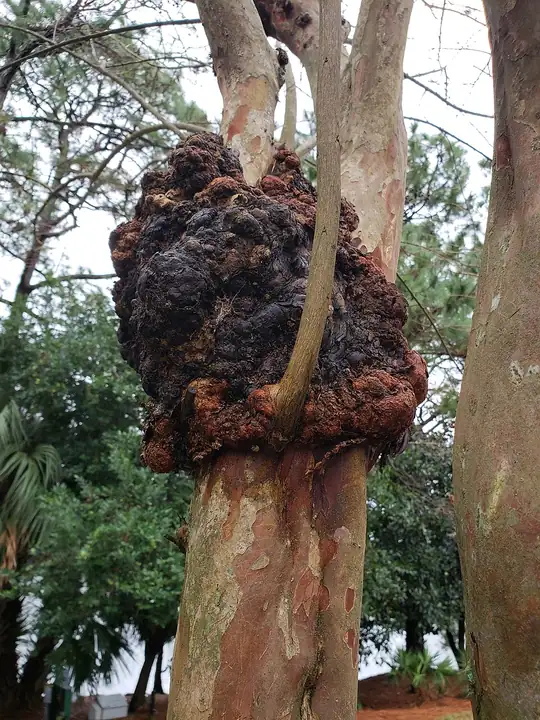
Crown gall
Bacterium (Agrobacterium tumefaciens; related A. vitis on grape and A. rubi on brambles)
| Type | Bacteria |
|---|---|
| Cause | Bacterium (Agrobacterium tumefaciens; related A. vitis on grape and A. rubi on brambles) |
| When | Galls show 2 to 4 weeks after infection during the growing season. |
About
A soil-borne bacterial disease that causes rough, tumor-like swellings on roots and at the base of the stem. It affects hundreds of plants, including fruit trees, grapes, brambles and roses.
Also called crown gall
How to recognize it
Symptoms
Round, rough, light-colored swellings form at the soil line, on roots and sometimes on stems, from a tenth of an inch to a foot across. Older galls turn dark, hard and cracked. Badly galled plants grow poorly and can decline.
Often confused with
Galls can look like damage from boring insects or woolly aphids; cut crown galls are softer than wood and lack normal growth rings.
Worse when
Fresh wounds on roots or the lower stem from planting, grafting, digging, sucker removal or string trimmers.
How it spreads
The bacteria live in soil for many years and move mainly on the roots of infected nursery plants and in infested soil.
When
Galls show 2 to 4 weeks after infection during the growing season.
What to do, gentlest first
Prevention works best; most sprays only protect healthy leaves and can't cure infected ones. Always read and follow the product label.
Plant clean stock and avoid wounds Prevent
Check roots and crowns before you buy or plant, and never plant anything with galls. Keep string trimmers and tools away from the base of trees and canes.
Do not replant susceptible plants in the same spot Prevent
After removing a galled plant, put something unrelated there instead of fruit trees, brambles or roses. UC IPM suggests solarizing bare, moist soil under clear plastic for 4 to 6 weeks in sunny weather.
The bacteria can persist in soil for many years.
Remove infected young plants By hand
Dig out newly planted galled plants with the soil around the roots and throw them out, not in compost. On older trees that still grow well, galls can be cut out in dry weather.
Disinfect tools with a 10% bleach solution afterward.
Agrobacterium radiobacter strain K84 (or K1026) Natural enemies
This harmless relative of the crown gall bacterium can protect healthy roots from infection.
It is a protectant, not a cure for existing galls, and it does not work against the grape crown gall strain. Follow the label.
Plants it affects
Apple (backyard tree), Apricot, Black raspberry (blackcap), Blackberry, Cherry (sweet and tart), Dahlia, Grape, Hazelnut (filbert), Marigold, Peach, Plum, Raspberry
Sources
Photo: Photo: Scot Nelson, CC0, via Wikimedia Commons (CC0). Photo resized for the web.

Planting dates and advice are general guidance; check with your local Cooperative Extension office for your area.