
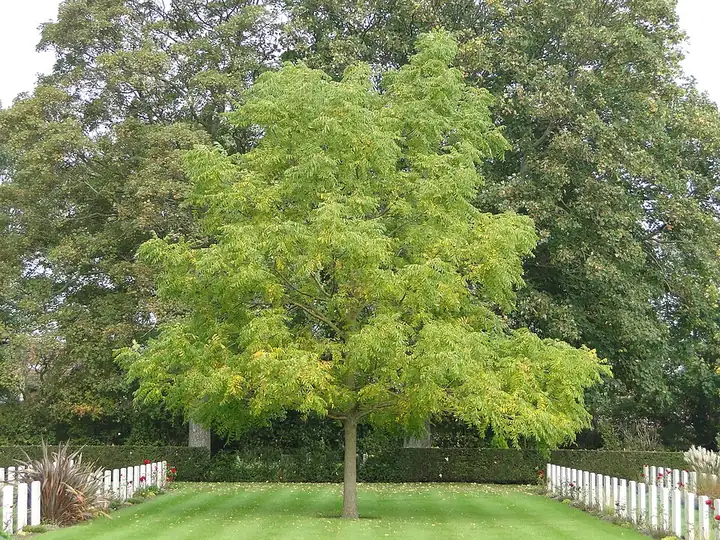
Black walnut toxicity
Not an infection: juglone, a natural chemical from the roots, leaves, nut hulls and wood of black walnut and butternut, poisons sensitive plants
| Type | Not an infection |
|---|---|
| Cause | Not an infection: juglone, a natural chemical from the roots, leaves, nut hulls and wood of black walnut and butternut, poisons sensitive plants |
| When | Any time during the growing season. |
About
Black walnut trees release juglone, which stunts, wilts and can kill sensitive plants growing over their roots. Tomatoes, peppers, potatoes, blueberries and shrubs like azaleas and lilacs are very sensitive, while many other plants grow fine nearby.
Also called juglone toxicity, juglone, walnut toxicity, black walnut wilt, walnut wilt
How to recognize it
Symptoms
Sensitive plants wilt, even in moist soil, then leaves yellow or brown, and the plant may die; sometimes only part of the plant wilts. Tomato leaves yellow, twist and pucker, and the inside of the stem may darken. New transplants can collapse within days, while plants near a young walnut may decline over years as its roots spread.
Often confused with
It is easily mistaken for Verticillium wilt, herbicide injury or drought. Suspect juglone when a black walnut or butternut grows within about 50 to 80 feet and only sensitive kinds of plants are suffering.
Worse when
Planting sensitive crops in a mature walnut's root zone, especially near the edge of its canopy, and walnut leaves or hulls left in beds. Hickories, pecan and English walnut make much less juglone.
How it spreads
It does not spread between garden plants. Juglone comes from walnut roots, leaves and hulls, and it can linger in the soil for five or more years after the tree is cut, until the roots rot.
When
Any time during the growing season.
What to do, gentlest first
This is not an infection, so sprays for diseases won't help. Fix the cause below.
Plant tolerant crops near walnuts Prevent
Grow sensitive plants well away from the tree. Near it, try tolerant plants such as beans, beets, carrots, corn, melons, onions, squash, black raspberry, currants, redbud, most maples, oaks, forsythia, arborvitae, juniper, rose of Sharon, daylilies, ferns, astilbe, black-eyed Susan, bee balm, marigolds and zinnias.
Tolerance lists come from garden observation, not careful tests, and sources don't always agree.
Keep walnut debris out of beds Prevent
Rake walnut leaves and hulls out of gardens and pull walnut seedlings. Fully hot-compost walnut leaves before using them.
Wisconsin Extension pages disagree on walnut wood chips as mulch; to be safe, keep them away from sensitive plants.
Move sensitive plants By hand
An affected plant can't be cured. Move sensitive plants out of the walnut's root zone, or replace them with tolerant ones.
Cutting the walnut down doesn't fix the soil right away.
Raised beds with a root barrier Barrier
If sensitive plants must grow nearby, use raised beds with wood, stone or concrete barriers that keep walnut roots out.
Plants it affects
Apple (backyard tree), Asparagus, Azalea, Blackberry, Blueberry, Cabbage, Eggplant, Hydrangea, Lilac, Peony, Pepper (sweet and chili), Potato, Rhododendron, Rhubarb, Tomato
Sources
Photo: Photo: Adrian S Pye / Wikimedia Commons, CC BY-SA 2.0 (CC BY-SA 2.0). Photo resized for the web.

Planting dates and advice are general guidance; check with your local Cooperative Extension office for your area.