
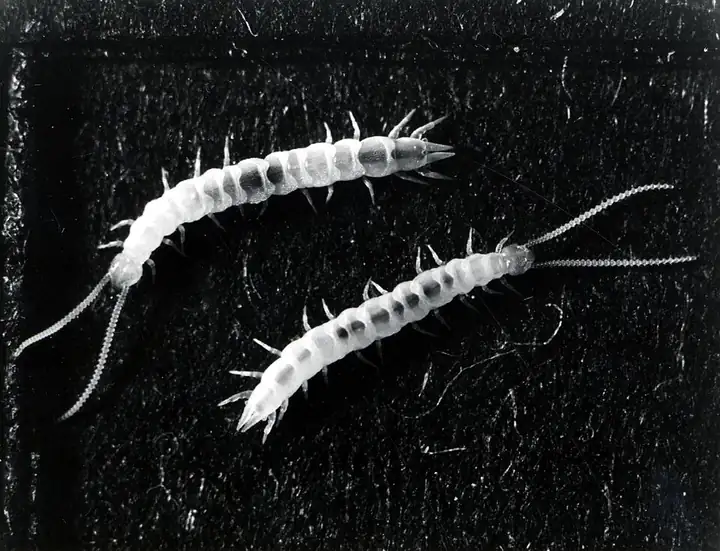
Garden symphylan
Scutigerella immaculata
| Type | Insect |
|---|---|
| When | Spring and fall, when they feed near the surface. |
| Pressure by region | High pressure: Pacific Northwest |
About
Not an insect but a small, fast-running soil animal related to centipedes. It is white, about a quarter inch long when grown, with up to 12 pairs of legs (PNW Handbook, UC IPM). The app lists it with insects.
Spotting it
Damage
Symphylans chew sprouting seeds, fine roots and plant parts touching the soil, so seeds fail to come up, seedlings die and older plants are stunted. Damage often shows up in the same patches year after year.
How to find it early
Before planting in spring, dig down to moist soil, set half a potato cut side down on it, cover it, and check after one to three days for small white animals that run from the light. You can also dig up a shovelful of soil and look through it (PNW Handbook).
When
Spring and fall, when they feed near the surface.
Life cycle
Eggs, young and adults are all found in the soil most of the year. In western Oregon they take about 2 to 3 months to mature and can have two generations a year; they move into the top 6 inches of moist soil in spring and fall and go deeper in July and August.
What to do, gentlest first
Start at the top. Sprays are a last step; always read and follow the product label.
Till when they are near the surface Prevent
Tilling crushes symphylans and breaks up the soil pores they travel through; the effect lasts about two to three weeks. Do it right before planting, when they are in the top layer of soil (OSU); UC IPM suggests tilling vigorously while the soil is dry.
Choose and rotate crops Prevent
Potatoes and beans are rarely hurt and can lower numbers, while spinach and mustard build them up. Larger-seeded crops do better than small-seeded ones, and planting squash more thickly helps enough seedlings survive.
Firm or flood the soil Prevent
Rolling or packing the soil after planting can limit their movement, and flooding for about 3 weeks helps where the soil holds water (UC IPM, OSU). OSU also suggests limiting heavy additions of manure and crop residue.
Protect natural enemies Natural enemies
Fungi, predatory mites, ground beetles, centipedes and spiders attack symphylans, though little is known about how much they help (PNW Handbook).
Plants it goes after
Asparagus, Beet, Broccoli, Carrot, Mint, Onion, Spinach, Strawberry, Sweet corn, Winter squash and pumpkin, Zucchini and summer squash
Pressure by region
They infest many home gardens in western Oregon and Washington, mainly moist, well-structured soils rich in organic matter. UC IPM documents damage in California (Santa Cruz County). Ratings outside the Pacific Northwest and California are estimates.
| Northeast | Low |
|---|---|
| Southeast | Low |
| South Central | Low |
| Midwest | Low |
| Great Plains | Low |
| Mountain West | Low |
| Southwest | Low |
| Pacific Northwest | High pressure |
| California | Moderate |
| Alaska | Low |
| Hawaii | Low |
Ratings come from extension sources where available; some are estimates, as noted above.
Sources
Photo: Photo: USDA Forest Service, Region 6 State & Private Forestry, Forest Health Protection, Public domain (USDA), via Wikimedia Commons. Photo resized for the web.

Planting dates and advice are general guidance; check with your local Cooperative Extension office for your area.