
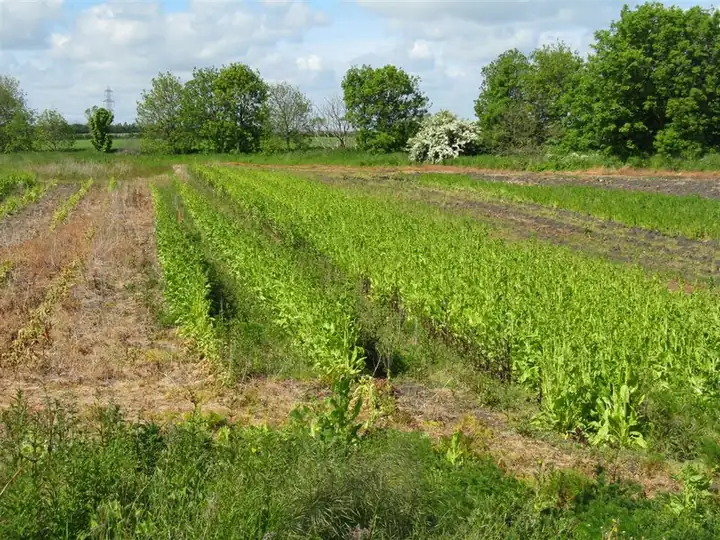
Bolting (going to seed)
Not an infection: heat, long days or a spell of cold tells the plant to flower early
| Type | Not an infection |
|---|---|
| Cause | Not an infection: heat, long days or a spell of cold tells the plant to flower early |
About
Leafy and cool-season crops like lettuce, spinach, cilantro and broccoli suddenly send up a tall flower stalk. Once they do, leaves turn bitter and heads stop forming.
Also called bolting, going to seed, premature flowering, seed stalk formation, buttoning
How to recognize it
Symptoms
The center of the plant stretches upward into a tall stem with flower buds. Lettuce and spinach leaves get smaller and bitter, cilantro goes to flower and seed, and broccoli and cauliflower may make small, misshapen heads too early ('buttoning').
Often confused with
Hardneck garlic scapes and rhubarb or onion seed stalks are partly natural; snap them off and the plant keeps growing.
Worse when
Heat and long days (lettuce in heat, spinach in long late-spring days, cilantro in hot, humid weather); a long cold spell below about 50°F for young spring cabbage-family crops and onions; crowding; and old or stressed transplants.
How it spreads
It does not spread.
When
Late spring and early summer as days lengthen and heat builds; after cold snaps for spring transplants.
What to do, gentlest first
This is not an infection, so sprays for diseases won't help. Fix the cause below.
Grow in the cool seasons Prevent
Grow lettuce, spinach and cilantro in spring and fall, and grow broccoli and cauliflower in fall for steadier heads. For late spring plantings, choose varieties labeled heat-tolerant or slow to bolt.
Sow a little at a time Prevent
Sow cilantro every 2 to 3 weeks and stagger other plantings so one batch dodges the weather that bolts another.
Good transplants, space and moisture Prevent
Don't start transplants too early or hold them too long, harden them off, give plants room, keep soil moist and mulch with straw to keep roots cool.
Pinch and harvest early By hand
Pinch off cilantro flower stems to stretch the harvest, and pick leafy greens as soon as you see a stalk starting.
Bitterness gets much worse after bolting.
Row covers and shade Barrier
Row covers or low tunnels shield young cabbage-family plants from cold spells in spring; afternoon shade helps cilantro in heat.
Plants it affects
Broccoli, Cabbage, Carrot, Cauliflower, Cilantro (coriander), Lettuce, Onion, Rhubarb, Spinach
Sources
Photo: Photo: M J Richardson / Wikimedia Commons, CC BY-SA 2.0 (CC BY-SA 2.0). Photo resized for the web.

Planting dates and advice are general guidance; check with your local Cooperative Extension office for your area.