
About
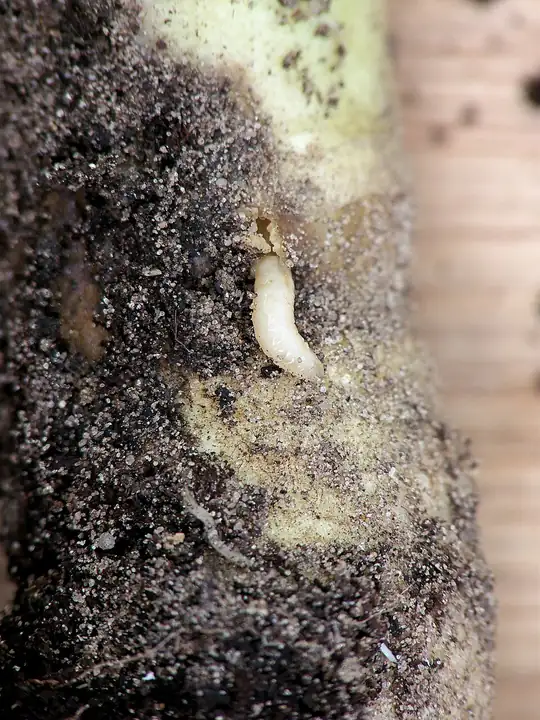
The larva of a small gray fly that looks like a little housefly. The legless, yellowish-white maggots, about a quarter inch long, tunnel in the roots of the cabbage family.
Spotting it
Damage
Plants wilt and look stunted while maggots tunnel through the roots, and badly hit plants die. Radishes and turnips get scarred, tunneled roots.
How to find it early
If a young cabbage-family plant wilts on a sunny day, dig it up and look for small white maggots and tunnels in the roots.
When
Spring through summer; in Minnesota the first flies lay eggs in early to mid-May.
Life cycle
Pupae spend the winter in the soil, and adult flies come out in spring and lay 50 to 200 eggs at the base of the plants. There are several generations a year, and each larva feeds for three to four weeks.
What to do, gentlest first
Start at the top. Sprays are a last step; always read and follow the product label.
Rotate and time plantings Prevent
Plant cabbage-family crops where they did not grow last year. In Alaska, UAF notes that waiting to plant susceptible crops until summer can let them escape the flies.
Remove infested plants By hand
Pull up infested plants, roots and all, and get them out of the garden.
Floating row cover Barrier
Cover seedlings or transplants right away, before the flies lay eggs (in Minnesota, early to mid-May), and leave the cover on through the egg-laying period.
Use covers on beds where cabbage-family crops did not grow last year, since pupae spend the winter in the soil and flies coming up underneath would be trapped with your plants.
Beneficial nematodes Natural enemies
UAF suggests insect-killing nematodes as part of the plan where infestations are bad.
No rescue spray Conventional spray
Minnesota Extension says no insecticide helps once maggots are feeding, and UAF says none is registered for root maggots in home vegetable gardens. Rely on rotation, timing and row covers.
Follow the label of any product you use.
Garden friends that go after it
Rove beetles
Protect these helpers: skip broad sprays when they're around.
Plants it goes after
Bok choy, Broccoli, Brussels sprouts, Cabbage, Cauliflower, Kale, Kohlrabi, Napa cabbage, Radish, Rutabaga, Tatsoi, Turnip
Pressure by region
UAF calls root maggots the most serious recurring insect pest of vegetables in Alaska, so Alaska is rated high. It is a northern pest; Minnesota Extension covers it, and other northern regions are rated moderate for lack of their own source. Southern, Southwest, California and Hawaii low ratings are estimates.
| Northeast | Moderate |
|---|---|
| Southeast | Low |
| South Central | Low |
| Midwest | Moderate |
| Great Plains | Moderate |
| Mountain West | Moderate |
| Southwest | Low |
| Pacific Northwest | Moderate |
| California | Low |
| Alaska | High pressure |
| Hawaii | Low |
Ratings come from extension sources where available; some are estimates, as noted above.
Sources
Photo: Photo: Rasbak, CC BY-SA 3.0, via Wikimedia Commons (CC BY-SA 3.0). Photo resized for the web.

Planting dates and advice are general guidance; check with your local Cooperative Extension office for your area.