
Cucumber mosaic
Virus (cucumber mosaic virus, a cucumovirus) spread by aphids
| Type | Virus |
|---|---|
| Cause | Virus (cucumber mosaic virus, a cucumovirus) spread by aphids |
| When | Spring through fall, whenever aphids are active. |
About
Cucumber mosaic virus infects more than 1,200 kinds of plants, from squash and peppers to tomatoes, spinach and garden flowers. Aphids pick it up and pass it on within minutes, so insect sprays can't keep up. There is no cure, so resistant varieties, weed control and pulling sick plants are the best defenses.
Also called cucumber mosaic virus, CMV, cucumber mosaic, cucumovirus
How to recognize it
Symptoms
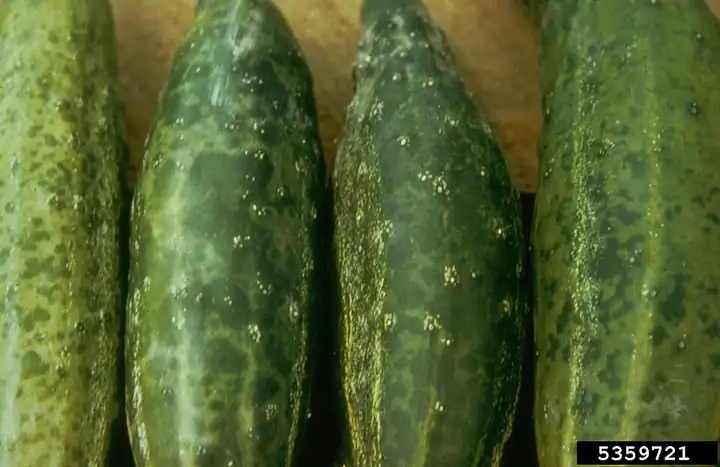
Squash, melons and cucumbers get a yellow mosaic, downward-curled, misshapen leaves and short, bunched growth, and fruit can be small, mottled and misshapen; summer squash and many melons are hit hardest. Tomatoes turn yellow, bushy and stunted, with very thin shoestring leaves and few fruit. Peppers get mottled, dull, leathery leaves and small, wrinkled, pale fruit that may have sunken brown spots.
Often confused with
Tobacco and tomato mosaic cause nearly the same mottling on tomatoes, and shoestring leaves look like their fernleaf symptom. The two are managed differently, so a lab test is worth it.
Worse when
Busy aphid populations, weeds and nearby crops that carry the virus, and young plants, which suffer the most.
How it spreads
More than 75 kinds of aphids carry it. They pick it up in under a minute of feeding and can pass it on right away, but only for a few hours. It also moves in sap on tools and hands and survives winter in weeds and other plants; seed is not a main source in most vegetables.
When
Spring through fall, whenever aphids are active.
What to do, gentlest first
Prevention works best; most sprays only protect healthy leaves and can't cure infected ones. Always read and follow the product label.
Resistant cucumbers and peppers Prevent
Choose cucumber, squash and pepper varieties listed as CMV-resistant or tolerant, and buy clean seed and transplants.
No tomato varieties resist cucumber mosaic.
Weed control and a tall border Prevent
Keep weeds and volunteer plants out of and around the garden. A border of a taller crop the virus doesn't infect, such as sweet corn, can slow aphids on their way in, and timing plantings to miss big aphid flights keeps young plants safer.
Pull infected plants By hand
There is no cure. Pull plants with symptoms, along with their debris, so aphids have less virus to pick up, and clean tools afterward.
Silver reflective mulch Barrier
Silver reflective mulch deters aphids and keeps many from landing on young plants.
Insecticides don't stop it Organic spray
Aphids pass the virus before insecticides can kill them, and sprays can make them move around more, spreading it faster. Mineral oil sprays can help block aphids from passing the virus.
No spray cures an infected plant. Follow the label.
Plants it affects
Cantaloupe (muskmelon), Carrot, Celery, Columbine, Cucumber, Dahlia, Delphinium, Garden phlox (tall phlox), Geranium (annual, Pelargonium), Green beans (snap beans), Lettuce, Onion, Pansy and viola, Pepper (sweet and chili), Petunia, Spinach, Tomato, Watermelon, Winter squash and pumpkin, Zinnia, Zucchini and summer squash
Sources
Photo: Photo: William M. Brown Jr., CC BY 3.0 us, via Wikimedia Commons (CC BY 3.0 us). Photo resized for the web.

Planting dates and advice are general guidance; check with your local Cooperative Extension office for your area.