
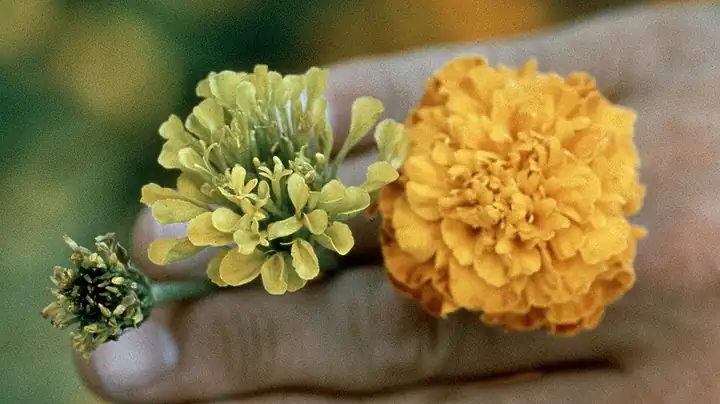
Aster yellows
Phytoplasma (a tiny wall-less bacterium that lives in the plant's food-conducting tissue) carried by the aster leafhopper (Macrosteles fascifrons)
| Type | Phytoplasma |
|---|---|
| Cause | Phytoplasma (a tiny wall-less bacterium that lives in the plant's food-conducting tissue) carried by the aster leafhopper (Macrosteles fascifrons) |
| When | Midsummer into fall, a few weeks after leafhoppers arrive. |
About
Aster yellows infects hundreds of vegetables, flowers and weeds, and leafhoppers carry it from plant to plant. There is no cure, so infected plants are pulled to protect the rest of the garden.
Also called aster yellows, aster yellows phytoplasma, phytoplasma
How to recognize it
Symptoms
Plants stunt and leaves turn pale, yellow, red or purple, often with a bushy tuft of thin shoots (witches' broom). Flowers stay green, twist, or sprout odd leafy growth; coneflowers can grow small extra flower heads out of the main head. Carrots get reddish tops and thin, bitter, hairy roots; lettuce centers turn yellow and stubby, with tan or pinkish latex under the midribs.
Often confused with
Herbicide injury and eriophyid mite damage can also twist and discolor plants, and neither one means the plant must be pulled. Green, leafy flowers point to aster yellows, but only a lab test confirms it.
Worse when
Big flights of leafhoppers, which ride weather fronts north early in the season and move into gardens when nearby grain or alfalfa is cut or when dry weather sends them to watered plants.
How it spreads
Leafhoppers pick it up while feeding on sick plants and, after about two weeks, pass it on every time they feed for the rest of their lives; it survives winter in the roots and crowns of infected perennials and weeds, not in dead debris.
When
Midsummer into fall, a few weeks after leafhoppers arrive.
What to do, gentlest first
Prevention works best; most sprays only protect healthy leaves and can't cure infected ones. Always read and follow the product label.
Clear perennial weeds Prevent
Pull dandelions and other perennial weeds in and around the garden, since the disease can hide in them from year to year.
Use clean garlic and resistant kinds Prevent
Never save garlic cloves from yellowed plants to replant. Resistant varieties exist for a few crops, and in beds that keep getting it, switch to plants that don't catch it, such as geraniums, impatiens and most shrubs.
No garlic varieties are known to resist it.
A little shade for lettuce Prevent
Leafhoppers tend to avoid shaded plants, so light shade over lettuce may lower the risk.
Pull infected plants right away By hand
Remove the whole plant, roots and all, as soon as you spot it. Bury it completely in the compost pile or the ground, or dispose of it as your local rules allow.
Infected plants never recover, and sick perennials keep feeding the disease to leafhoppers for years if left in place.
Floating row cover Barrier
A row cover left on all season keeps leafhoppers from reaching carrots, lettuce and other crops. Light-colored or reflective mulch can also confuse them.
Leafhopper sprays rarely help Conventional spray
Extension services say insecticides against leafhoppers work poorly in home gardens and landscapes and generally do not recommend them.
A spray can't cure an infected plant. If you do spray, use a product labeled for leafhoppers on that crop and follow the label, including the days to harvest.
Plants it affects
Aster, Blanket flower (gaillardia), California poppy, Canna, Carrot, Celery, Chrysanthemum (garden mum), Cilantro (coriander), Coreopsis (tickseed), Garlic, Lettuce, Marigold, Onion, Potato, Purple coneflower (echinacea), Strawflower
Sources
Photo: Photo: Whitney Cranshaw / Wikimedia Commons, CC BY 3.0 US (CC BY 3.0 US). Photo resized for the web.

Planting dates and advice are general guidance; check with your local Cooperative Extension office for your area.