
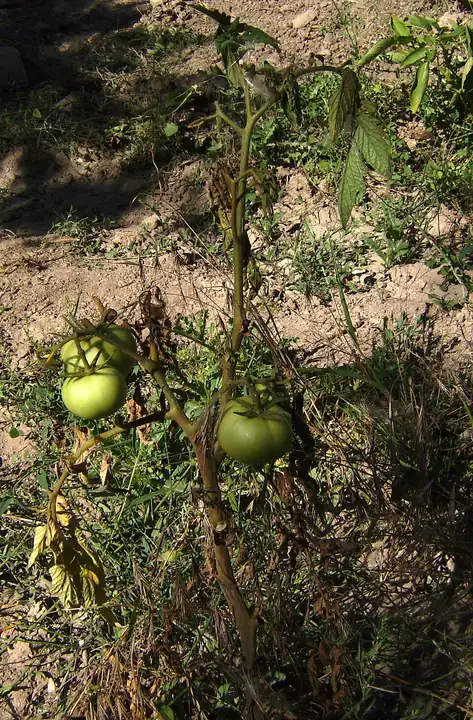
Fusarium wilt
Soil fungus (Fusarium oxysporum); each crop is attacked by its own specialized strain, such as f. sp. lycopersici on tomato and f. sp. conglutinans (cabbage yellows) on cabbage
| Type | Fungus |
|---|---|
| Cause | Soil fungus (Fusarium oxysporum); each crop is attacked by its own specialized strain, such as f. sp. lycopersici on tomato and f. sp. conglutinans (cabbage yellows) on cabbage |
| When | Midsummer onward, when soils are warm. |
About
Fusarium wilt is a soilborne disease that clogs a plant's water-conducting tissue so it yellows, wilts and dies. Once it is in your soil it stays for many years, so resistant varieties are the main defense.
Also called Fusarium wilt, Fusarium yellows
How to recognize it
Symptoms
Lower leaves turn yellow, often on just one side of the plant or one branch, and plants wilt in the afternoon heat and recover at night at first. The yellowing climbs until the whole plant wilts and dies. Cutting the lower stem lengthwise shows dark brown streaks in the water-conducting tissue.
Often confused with
Verticillium wilt looks almost the same; Fusarium browning tends to be darker and it prefers warmer soil. A lab test is the only sure way to tell them apart.
Worse when
Warm soil (the tomato strain does best around 82°F), and acidic soil makes it worse.
How it spreads
Tough resting spores survive many years in soil and plant debris and move with soil, water, tools and infected transplants; the fungus enters through the roots.
When
Midsummer onward, when soils are warm.
What to do, gentlest first
Prevention works best; most sprays only protect healthy leaves and can't cure infected ones. Always read and follow the product label.
Resistant varieties Prevent
For tomatoes, look for F (race 1), FF (races 1 and 2) or FFF (races 1, 2 and 3) on the label; Clemson recommends FF or FFF. Resistant cabbage varieties exist for Fusarium yellows, and Rutgers says its 'Obsession DMR' basil is highly resistant to Fusarium wilt.
UC IPM notes cabbage resistance weakens in hot soil.
Clean soil and transplants Prevent
Start with pathogen-free transplants and potting mix. Clemson suggests raising tomato soil pH to 6.5 to 7.0 and feeding with nitrate nitrogen (calcium nitrate) instead of ammonium forms.
Long rotation and weed control Prevent
Keep susceptible crops out of infested soil for three to five years or more, and control weeds like pigweed and crabgrass that can carry the fungus.
Soil solarization Prevent
In sunny, hot areas, UC IPM suggests solarizing the soil under clear plastic before planting susceptible crops.
Remove whole plants By hand
Pull infected plants, roots and all, and destroy them rather than composting. Clean soil off tools.
No spray cures it Conventional spray
UMN and Clemson say there is no chemical control for Fusarium wilt. Skip fungicides and rely on resistance and rotation.
Plants it affects
Basil, Cabbage, Cantaloupe (muskmelon), Chayote, Chickpea, Dewberry, Eggplant, Ginger, Okra, Passion fruit, Peas, Pepper (sweet and chili), Southern peas, Sweet potato, Tomato, Watermelon
Sources
Photo: Photo: Victor M. Vicente Selvas, CC BY-SA 3.0, via Wikimedia Commons (CC BY-SA 3.0). Photo resized for the web.

Planting dates and advice are general guidance; check with your local Cooperative Extension office for your area.