
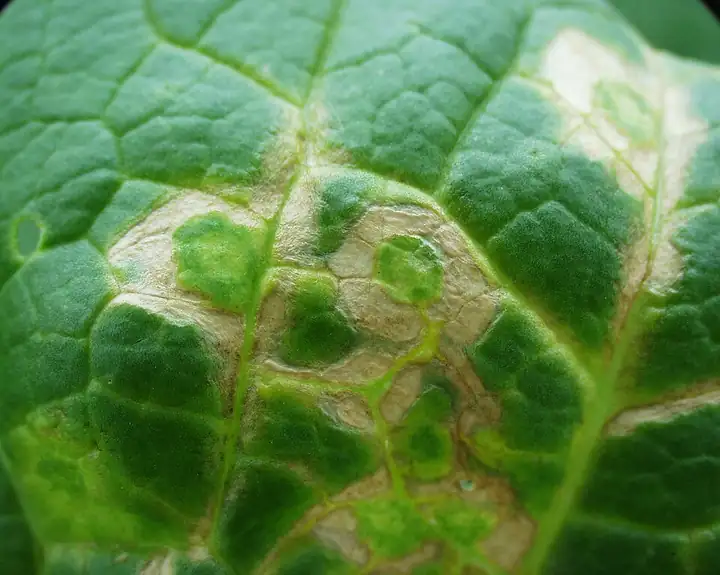
Turnip mosaic
Virus (turnip mosaic virus, a potyvirus) spread by aphids
| Type | Virus |
|---|---|
| Cause | Virus (turnip mosaic virus, a potyvirus) spread by aphids |
About
Turnip mosaic infects cabbage, turnips, radishes, mustard and many other cabbage-family crops, plus some lettuce, spinach and flowers. Aphids carry it in from mustard-family weeds. There's no cure, so weed control and removing sick plants are key.
Also called turnip mosaic virus, TuMV
How to recognize it
Symptoms
Young leaves get pale rings and a light and dark green mosaic, and they may twist or pucker. The pale spots later turn into brown or black spots and rings, often near the veins, and lower leaves may die. Cabbage, cauliflower and Brussels sprouts can show black ring spots, and cabbage heads may develop dark, sunken specks inside that show up only after months in storage. On lettuce, look for small light green spots, yellow veins, curved midribs and lopsided leaves.
Often confused with
Cauliflower mosaic virus causes similar mottling on cabbage-family crops. Black specks in cabbage heads can also come from a disorder called pepper spot or from fungi. A lab test confirms the virus.
Worse when
Warm weather (symptoms are strongest at about 72 to 86°F and may hide below about 61°F), lots of aphids, and mustard-family weeds such as shepherd's purse and pennycress nearby.
How it spreads
Green peach aphids, cabbage aphids and many other aphids pick it up and pass it on during brief feeding. It can also pass when leaves of sick and healthy plants rub together. It is not carried in seed, and it survives winter in mustard-family weeds and perennial crops like horseradish.
When
Spring through fall, whenever aphids are active; cold, wet weather slows it down.
What to do, gentlest first
Prevention works best; most sprays only protect healthy leaves and can't cure infected ones. Always read and follow the product label.
Clear mustard-family weeds Prevent
Before planting, remove weeds such as shepherd's purse, pennycress and wild mustards in and around the garden, since they shelter both the virus and aphids.
Choose resistant types Prevent
Few resistant cabbage-family varieties are sold, so look for TuMV resistance on seed labels. Butterhead, leaf and romaine lettuces are resistant.
Store only clean cabbage Prevent
Store only cabbage heads that showed no symptoms in the garden, since infected heads can develop specks in storage.
Pull infected plants By hand
Pull and destroy plants with symptoms, along with nearby weeds that could hold the virus. Infected plants don't recover.
Row cover and reflective mulch Barrier
Floating row cover keeps aphids off young plants, and silver reflective mulch can discourage them from landing.
Aphid control helps a little Organic spray
Insecticides can lower aphid numbers and slow spread a bit, but they can't kill aphids fast enough to stop them from passing the virus.
No spray cures an infected plant. Follow the label.
Plants it affects
Bok choy, Broccoli, Brussels sprouts, Cabbage, Cauliflower, Endive and escarole, Horseradish, Kale, Lettuce, Mustard greens, Napa cabbage, Petunia, Radish, Spinach, Turnip, Watercress, Zinnia
Sources
Photo: Photo: Jochen Kreiselmaier, DLR-Rheinpfalz, CC BY-SA 4.0, via Wikimedia Commons (CC BY-SA 4.0). Photo resized for the web.

Planting dates and advice are general guidance; check with your local Cooperative Extension office for your area.