
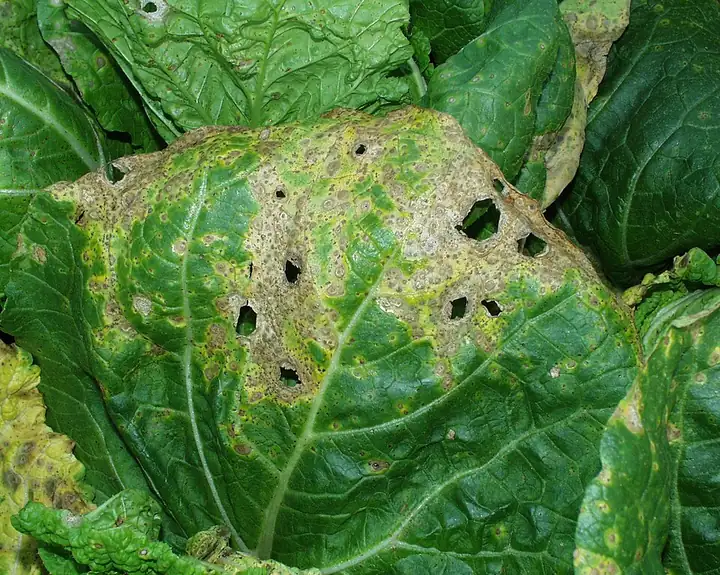
Alternaria leaf spot (cabbage family)
Fungi (Alternaria brassicicola and related Alternaria species)
| Type | Fungus |
|---|---|
| Cause | Fungi (Alternaria brassicicola and related Alternaria species) |
| When | Summer into fall, especially in wet spells. |
About
A leaf-spotting fungus of broccoli, cabbage, cauliflower, kale and their kin. It is most damaging on broccoli and cauliflower, where it can also spot and rot the heads.
Also called Alternaria leaf spot, Alternaria leaf spot of brassicas, Alternaria head rot
How to recognize it
Symptoms
Tiny black specks on older, lower leaves grow into round brown spots with target-like rings and often a yellow halo. Spot centers can crack or fall out, spots merge into large dead patches, and badly hit leaves drop. Broccoli heads and cauliflower curds get small brown to black spots and then break down quickly.
Worse when
Mild to warm, humid weather (about 60 to 78°F) with long spells of wet leaves.
How it spreads
Comes in on infected seed and lives on in crop debris and in mustard-family weeds; spores move on wind, rain splash, tools and insects such as flea beetles.
When
Summer into fall, especially in wet spells.
What to do, gentlest first
Prevention works best; most sprays only protect healthy leaves and can't cure infected ones. Always read and follow the product label.
Clean seed and tolerant varieties Prevent
Start with clean seed and don't save seed from spotted plants. For June-planted broccoli, UMN suggests Wolfman, Green Magic and Eastern Crown.
Rotate and weed Prevent
Wait three years before growing cabbage-family crops in the same spot, skip brassica cover crops like tillage radish, and pull shepherd's purse and wild mustards. Space plants for air flow.
Remove sick plants and debris By hand
If only a few plants are spotted, pull them as soon as you see it. Bury or remove crop leftovers after harvest, and wash hands and tools after handling sick plants.
Chlorothalonil or azoxystrobin (rarely needed) Conventional spray
Farms use protectant fungicides such as chlorothalonil and azoxystrobin, starting before spots spread.
UMN says most home gardeners don't need fungicides, and sprays won't undo spots already there. Follow the label, including days to harvest.
Plants it affects
Bok choy, Broccoli, Broccoli raab (rapini), Brussels sprouts, Cabbage, Cauliflower, Collards, Kale, Kohlrabi, Mustard greens, Napa cabbage, Radish, Rutabaga, Turnip
Sources
Photo: Photo: Jochen Kreiselmaier, DLR Rheinpfalz / Wikimedia Commons, CC BY-SA 4.0 (CC BY-SA 4.0). Photo resized for the web.

Planting dates and advice are general guidance; check with your local Cooperative Extension office for your area.