
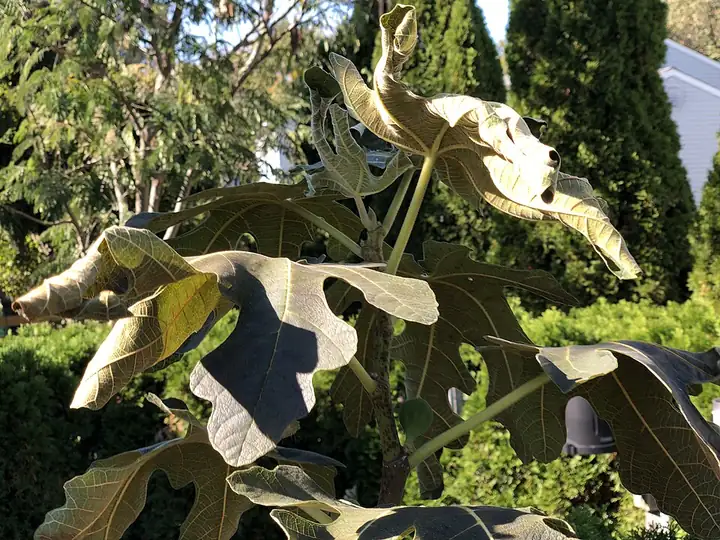
Frost and freeze injury
Not an infection: ice forms in or on plant tissue at or below 32°F and ruptures cells
| Type | Not an infection |
|---|---|
| Cause | Not an infection: ice forms in or on plant tissue at or below 32°F and ruptures cells |
| When | Late spring after plants leaf out or bloom, and the first fall frosts. |
About
Cold nights can blacken tender vegetables and kill fruit blossoms. Tender crops like tomatoes, peppers, beans and squash cannot take any frost, while hardy crops like kale and cabbage handle moderate freezes.
Also called frost injury, freeze injury, frost damage, freeze damage, cold damage
How to recognize it
Symptoms
Leaves look water-soaked, then wilt, turn black or brown and collapse; light frost may only bronze or bleach leaf edges. Frozen blossoms turn brown and mushy, and strawberry flowers show dark, dead centers within a day. Rhubarb leaves blacken and stalks go limp.
Often confused with
In stone fruit, frost-killed blossoms fall off while brown rot blossoms stay attached with gum. In strawberries, frost damage can resemble boron or calcium shortage, thrips feeding or poor pollination.
Worse when
Clear, calm nights, when heat radiates away and leaf surfaces can chill to 32°F even while the air is a few degrees warmer.
How it spreads
It does not spread.
When
Late spring after plants leaf out or bloom, and the first fall frosts.
What to do, gentlest first
This is not an infection, so sprays for diseases won't help. Fix the cause below.
Plant on time and harden off Prevent
Set out tender crops after your local frost-free date and harden transplants gradually. Harvest tender crops before a fall frost; tomatoes picked at the mature-green stage will ripen indoors.
Fruit blossoms are the weak point: at petal fall, 28°F kills about 10% of young apples and 25°F about 90%; open strawberry flowers are hurt at about 30°F and open blueberry flowers at about 27°F.
Be patient after a freeze By hand
Wait to see which parts recover, prune only branches that are clearly dry and brittle, and leave damaged leaves on perennials until they brown.
Fertilizer does not help plants recover from cold damage.
Cover plants on cold nights Barrier
When lows in the mid-30s°F are forecast, cover vegetables and strawberries with sheets, blankets, frost fabric or row cover, held up off the leaves on stakes or hoops. Remove covers the next day once it is above freezing.
Covers generally stop helping below about 28°F. Trees and large shrubs are usually too big to cover.
Plants it affects
Apple (backyard tree), Apricot, Blueberry, Cantaloupe (muskmelon), Cucumber, Eggplant, Fig, Grape, Green beans (snap beans), Hardy kiwi (kiwiberry), Japanese maple, Pepper (sweet and chili), Potato, Rhubarb, Saucer magnolia, Strawberry, Sweet corn, Sweet potato, Tomato, Watermelon, Winter squash and pumpkin, Zucchini and summer squash
Sources
- yardandgarden.extension.iastate.edu
- yardandgarden.extension.iastate.edu
- extension.sdstate.edu
- extension.sdstate.edu
- content.ces.ncsu.edu
- extension.umn.edu
Photo: Photo: Famartin, CC BY-SA 4.0, via Wikimedia Commons (CC BY-SA 4.0). Photo resized for the web.

Planting dates and advice are general guidance; check with your local Cooperative Extension office for your area.