
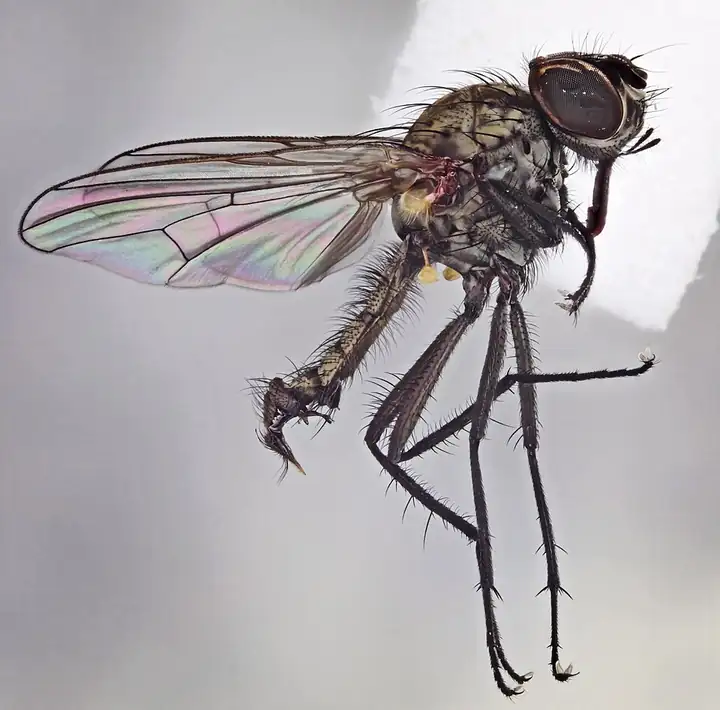
Seedcorn maggot
Delia platura
| Type | Insect |
|---|---|
| When | Early to late spring, especially when soil is cold and wet. |
| Pressure by region | Moderate: Northeast, Midwest, Great Plains |
About
The larva of a small grayish-brown fly. The yellowish-white maggot, about a quarter inch long with a pointed head, eats into seeds and seedlings in cold, wet spring soil.
Spotting it
Damage
Seeds never come up, or when you dig them up they are hollowed out with a white maggot inside. It is worst on large-seeded warm-season crops such as corn, beans, peas and melons.
How to find it early
If a row comes up patchy, dig up a few seeds where nothing sprouted and look for maggots or hollowed seeds.
When
Early to late spring, especially when soil is cold and wet.
Life cycle
Pupae spend the winter in the soil, and flies emerge in early spring and lay eggs where they smell decaying manure, compost or plowed-in cover crops. There are two to four generations a year in Maryland (three to five in New York), and the early spring generations do the most harm.
What to do, gentlest first
Start at the top. Sprays are a last step; always read and follow the product label.
Plant into warm soil Prevent
Wait until the soil warms, and sow seeds shallowly so they sprout fast. You can also pre-sprout corn, pea and bean seeds indoors before planting.
Let organic matter break down first Prevent
Give a turned-in cover crop at least three weeks to decompose before planting, and avoid working in fresh manure right before sowing, since the smell of decay draws the flies.
Replant By hand
If seeds fail, replant once the soil is warmer.
No home-garden spray Conventional spray
Commercial growers use insecticide-treated seed or transplant drenches (Cornell). For home gardens, timing and soil prep are the practical tools.
Treated seed may carry insecticides such as neonicotinoids or spinosad (Cornell); handle it with gloves, keep it away from children, pets and birds, and never eat it.
Plants it goes after
Asparagus, Beet, Cabbage, Cantaloupe (muskmelon), Cucumber, Dry beans (pinto, black, kidney, navy), Edamame, Green beans (snap beans), Onion, Peas, Potato, Radish, Spinach, Sweet corn, Turnip, Watermelon, Winter squash and pumpkin, Zucchini and summer squash
Pressure by region
It is a spring pest of cold, wet soils; Cornell and Maryland Extension cover it in the Northeast. No regional severity source was found, so the moderate ratings for the Midwest and Great Plains and all low ratings, including Alaska and Hawaii, are estimates.
| Northeast | Moderate |
|---|---|
| Southeast | Low |
| South Central | Low |
| Midwest | Moderate |
| Great Plains | Moderate |
| Mountain West | Low |
| Southwest | Low |
| Pacific Northwest | Low |
| California | Low |
| Alaska | Low |
| Hawaii | Low |
Ratings come from extension sources where available; some are estimates, as noted above.
Sources
Photo: Photo: Martin Cooper, CC BY 2.0, via Wikimedia Commons (CC BY 2.0). Photo resized for the web.

Planting dates and advice are general guidance; check with your local Cooperative Extension office for your area.