
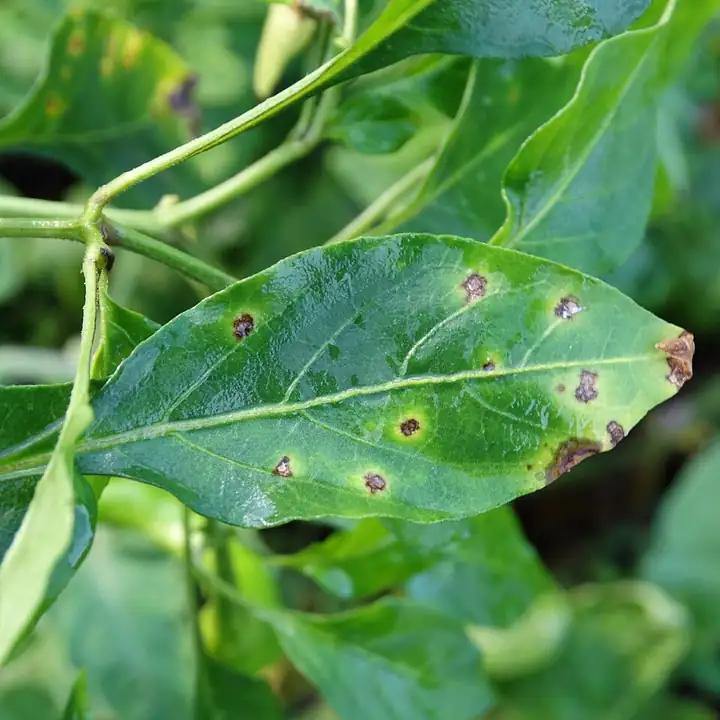
Bacterial spot
Bacteria (Xanthomonas euvesicatoria, X. vesicatoria, X. gardneri and X. perforans)
| Type | Bacteria |
|---|---|
| Cause | Bacteria (Xanthomonas euvesicatoria, X. vesicatoria, X. gardneri and X. perforans) |
| When | Warm, wet stretches of summer. |
About
Bacterial spot attacks the leaves, stems and fruit of tomatoes and peppers, especially in hot, rainy summers. Once it is in a planting it is very hard to stop, so clean seed and dry leaves matter most.
Also called bacterial spot, bacterial leaf spot
How to recognize it
Symptoms
Leaves get many small spots (under an eighth of an inch) that look water-soaked at first and turn brown; on tomato they often have a yellow halo and the centers may fall out. Fruit gets raised, scabby brown spots about a quarter inch across, on peppers mostly near the stem end.
Often confused with
Early blight spots are larger and have concentric rings; bacterial spots are small and ringless.
Worse when
Hot (75 to 86°F), humid weather with frequent rain or overhead watering.
How it spreads
The bacteria come in on seed and transplants and move by splashing water, hands and tools; they survive one to two years in plant debris and on volunteer plants.
When
Warm, wet stretches of summer.
What to do, gentlest first
Prevention works best; most sprays only protect healthy leaves and can't cure infected ones. Always read and follow the product label.
Clean seed and transplants Prevent
Use certified disease-free seed and healthy transplants. Hot-water seed treatment can kill bacteria carried on seed.
Hot-water treatment must be done at exact temperatures and times or it can kill the seed; get directions from your Extension office.
Resistant pepper varieties Prevent
Resistant pepper varieties are available, though each resists only certain races of the bacteria. Choices for tomato are limited.
Rotate, space and use drip Prevent
Keep tomatoes and peppers out of the same spot for three to four years, space plants, and water with drip instead of sprinklers.
Stay out of wet plants and remove diseased parts By hand
Do not handle or prune plants while they are wet, clean tools between plants, and remove badly infected plants and debris.
Copper Organic spray
Clemson says copper gives fairly good control when started early, and UMass notes copper is most effective combined with mancozeb.
Many strains are now copper-resistant (UMN), and sprays do little once disease is heavy. Copper only protects leaves it coats before infection; it will not heal spots already there. It can burn young leaves, especially in weather above 85°F, and some plants are sensitive (Purdue lists celery, strawberry, apple, pear and plum among them). PNW 591 rates copper hydroxide toxic to bees, so spray when bees are not foraging. Follow the label, including the days to wait before harvest.
Copper plus mancozeb Conventional spray
Mixing copper with mancozeb is the most effective chemical option UMass lists. It protects new growth; it will not clear spots already there.
Follow the label, including which crops it may be used on and how many days to wait before harvest.
Plants it affects
Arrowhead vine (syngonium), Astilbe (false spirea), Begonia, Chilacayote, Chokecherry, Cilantro (coriander), Coral bells (heuchera), English ivy (houseplant), Highbush cranberry (American cranberrybush), Japanese barberry, Monkshood, Natal plum (carissa), Pepper (sweet and chili), Plum, Tamarind, Tomato, Umbrella plant (schefflera), Viburnum
Sources
Photo: Photo: Scot Nelson, CC0, via Wikimedia Commons (CC0). Photo resized for the web.

Planting dates and advice are general guidance; check with your local Cooperative Extension office for your area.