
Damping-off
Soilborne water molds and fungi (Pythium, Rhizoctonia and Fusarium species)
| Type | Fungus |
|---|---|
| Cause | Soilborne water molds and fungi (Pythium, Rhizoctonia and Fusarium species) |
| When | Seed-starting time, from sowing until seedlings are a few weeks old. |
About
Damping-off kills seeds before they come up or makes young seedlings collapse at the soil line. Seedlings are only at risk for a short time after emerging, and affected ones cannot be saved, so clean supplies and good growing conditions are the answer.
Also called damping off, damping-off
How to recognize it
Symptoms
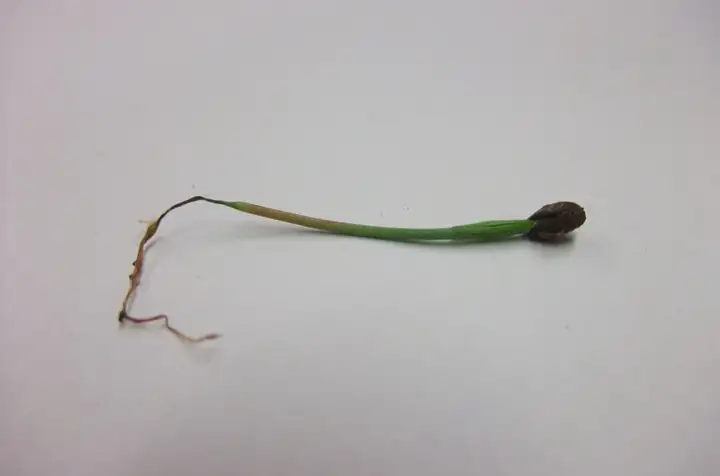
Seeds rot or seedlings never appear. Seedlings that do come up get soft, water-soaked, thread-thin stems at the soil line, then fall over and die; roots are missing, stunted or brown, and white fuzz may show in humid conditions.
Worse when
Cool, wet, poorly drained soil or potting mix, overwatering, low light, deep planting and high fertilizer salts.
How it spreads
The organisms live in soil and move with soil, water, dirty pots, trays and tools.
When
Seed-starting time, from sowing until seedlings are a few weeks old.
What to do, gentlest first
Prevention works best; most sprays only protect healthy leaves and can't cure infected ones. Always read and follow the product label.
Clean mix and containers Prevent
Use fresh, pasteurized potting mix, never garden soil or reused mix. Soak used pots and trays 20 to 30 minutes in a 10% bleach solution, rinse well, and clean tools and benches.
Warm soil and good light Prevent
Use a heat mat to keep seed-starting mix around 70 to 75°F so seedlings grow quickly past the risky stage, give 12 to 16 hours of light, and sow at the right depth.
Water carefully Prevent
Keep the mix evenly moist but not soggy, use pots with drainage holes, water with clean room-temperature water, and hold off on fertilizer until true leaves appear (then use quarter strength).
Outdoors, wait for warm soil Prevent
Direct-sow only when soil has warmed, in well-drained soil, and avoid planting too deep.
Discard affected seedlings By hand
Seedlings with damping-off will die (Wisconsin), so remove them with their mix and start again in clean supplies.
Treated seed Conventional spray
Wisconsin notes seed treated with the fungicide captan can help.
Handle treated seed with gloves, keep it away from children, pets and birds, and follow the packet directions.
Plants it affects
Basil, Beet, Broccoli, Broccoli raab (rapini), Cabbage, Cantaloupe (muskmelon), Carrot, Cilantro (coriander), Cucumber, Eggplant, Impatiens, Lettuce, Luffa (loofah gourd), Mâche (corn salad), Okra, Papaya, Pepper (sweet and chili), Salvia (ornamental sage), Sesame, Spinach, Tomato, Watermelon, Winter squash and pumpkin, Zucchini and summer squash
Sources
Photo: Photo: INAKAvillage211, CC BY-SA 3.0, via Wikimedia Commons (CC BY-SA 3.0). Photo resized for the web.

Planting dates and advice are general guidance; check with your local Cooperative Extension office for your area.