
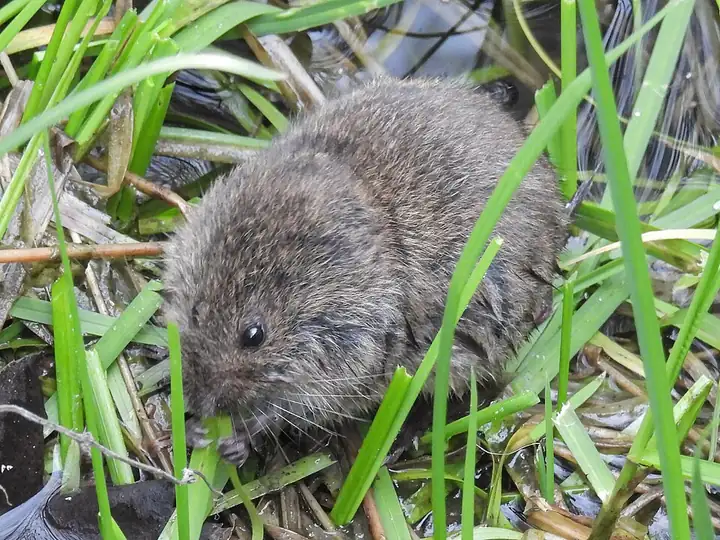
Voles
Meadow vole (Microtus pennsylvanicus), prairie vole (M. ochrogaster), pine or woodland vole (M. pinetorum), California vole (M. californicus) and others
| Type | Animal |
|---|---|
| When | Year-round, day and night. |
| Pressure by region | Moderate: Northeast, Southeast, South Central, Midwest, Great Plains, Mountain West, Southwest, Pacific Northwest, California |
About
Voles, sometimes called meadow mice, are stocky, short-tailed rodents about 5 to 8 inches long with small eyes and partly hidden ears. They eat vegetables, roots, bulbs and tubers and gnaw bark at the base of trees, usually out of sight under grass or mulch.
Spotting it
Damage
Meadow voles make surface runways about 1 1/2 inches wide through grass, with burrow holes 1 1/2 to 2 inches across. On trees they leave small gnaw marks about 1/8 inch wide in irregular patches at the base, and a full ring kills the tree; pine voles tunnel underground and eat roots.
How to find it early
Part the grass or mulch near beds and tree trunks to look for runways, small burrow holes, greenish droppings about 3/16 inch long, and fresh gnawing.
When
Year-round, day and night.
Life cycle
Voles breed all year, with a peak in spring; females mature in about five weeks and can have 5 to 10 litters a year of 3 to 6 young. They are active day and night all year and seldom live more than a year, and in some areas their numbers peak every 3 to 6 years.
What to do, gentlest first
Start at the top. Sprays are a last step; always read and follow the product label.
Take away cover Prevent
Mow grass around the garden, keep ground cover short, and pull mulch at least 2 feet back from tree trunks. UC IPM suggests a bare circle about 4 feet across around young trees and vines.
Fine-mesh fence and trunk guards Barrier
Surround beds with wire or flashing with mesh 1/4 inch or smaller, at least 12 inches high and buried 6 to 10 inches. Protect trunks with wire cylinders 18 to 24 inches high, set 4 to 6 inches into the soil.
Covered mouse snap traps Trap
Set standard mouse snap traps at right angles across runways, baited with peanut butter and oatmeal or apple slices, and check them twice a day. A small garden may need a dozen or more traps.
Cover traps with a piece of gutter or a box so birds cannot reach them, and keep children and pets away. California classes voles as nongame mammals (UC IPM), but rules differ by state. This guide does not recommend poison baits, which put pets and wildlife at risk. Trapping wildlife is regulated by state law, so check with your state wildlife agency before you set traps.
Repellents are unreliable Repellent
Little data show vole repellents work, so do not rely on them alone.
Use only products labeled for food crops if you spray anything you will eat, and follow the label. Keep children and pets off treated plants until the spray dries.
Predators Natural enemies
Many predators eat voles, but UC IPM notes most do not hunt close enough to homes and gardens to keep numbers down.
Plants it goes after
Artichoke, Beet, Brussels sprouts, Cabbage, Carrot, Cauliflower, Celery, Chestnut, Crocus, Hosta (plantain lily), Lettuce, Lingonberry, Pear, Radicchio, Ranunculus, Rattlesnake master, Saffron crocus, Salsify (oyster plant), Spinach, Sweet potato, Tomato, Tulip, Turnip
Pressure by region
There are 23 vole species in the U.S., and the meadow vole is the most widespread. No regional severity source was found, so all ratings are estimates; no Alaska or Hawaii source was found.
| Northeast | Moderate |
|---|---|
| Southeast | Moderate |
| South Central | Moderate |
| Midwest | Moderate |
| Great Plains | Moderate |
| Mountain West | Moderate |
| Southwest | Moderate |
| Pacific Northwest | Moderate |
| California | Moderate |
| Alaska | Low |
| Hawaii | Low |
Ratings come from extension sources where available; some are estimates, as noted above.
Sources
Photo: Photo: Erik Schiff, CC0, via Wikimedia Commons (CC0). Photo resized for the web.

Planting dates and advice are general guidance; check with your local Cooperative Extension office for your area.