
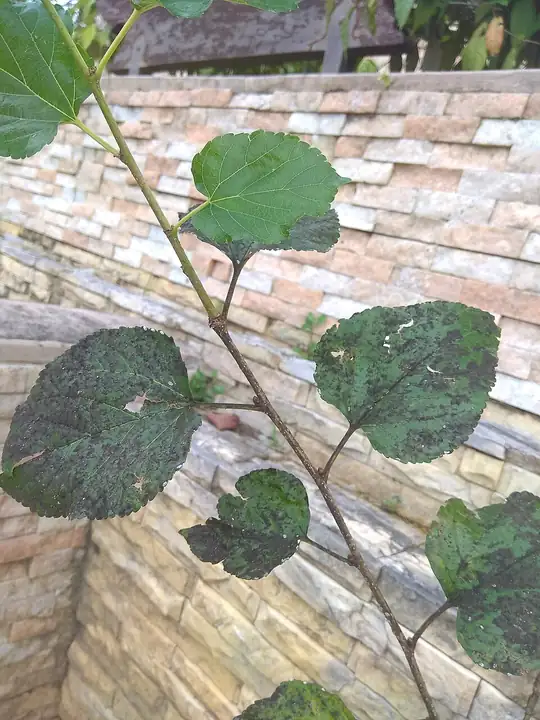
Sooty mold
Fungi (such as Capnodium, Fumago and Scorias) that grow on insect honeydew rather than infecting the plant
| Type | Fungus |
|---|---|
| Cause | Fungi (such as Capnodium, Fumago and Scorias) that grow on insect honeydew rather than infecting the plant |
| When | Whenever aphids, whiteflies, scales or other honeydew makers are feeding. |
About
Sooty mold is a black coating that grows on the sticky honeydew left by aphids, whiteflies, soft scales, mealybugs, psyllids and leafhoppers. It does not infect the plant, so the fix is controlling the insects.
Also called sooty mould
How to recognize it
Symptoms
A black, soot-like film coats leaves, stems and fruit, usually on top of sticky honeydew. Heavy coatings block light, which can slow growth and make leaves age and die early.
Often confused with
Leaf-spot diseases stain the leaf tissue itself; sooty mold sits on the surface and can be wiped or washed off.
Worse when
Large populations of honeydew-producing insects, and ants that tend and protect them.
How it spreads
The fungi grow wherever honeydew falls, including on plants and surfaces under infested plants.
When
Whenever aphids, whiteflies, scales or other honeydew makers are feeding.
What to do, gentlest first
Prevention works best; most sprays only protect healthy leaves and can't cure infected ones. Always read and follow the product label.
Control the insects making honeydew Prevent
Manage aphids, whiteflies, scales and mealybugs (see those entries). As they decline, sooty mold gradually fades.
Wash it off By hand
Hose leaves with a strong stream of water, or wash with soapy water. Produce with sooty mold is safe to eat after washing.
Stop the ants Natural enemies
Ants guard honeydew makers from their natural enemies, so controlling ants lets lady beetles and parasites do their work.
Fungicides are not needed Organic spray
The mold is not an infection, so fungicides do not help; treat the insects instead.
Plants it affects
Aloe vera, Broccoli, Cabbage, Calamondin, Calendula (pot marigold), Cantaloupe (muskmelon), Crape myrtle, Cucumber, Eggplant, Finger lime, Gardenia (cape jasmine), Green beans (snap beans), Kale, Kumquat, Lantana (garden), Lemon, Lettuce, Mandarin (satsuma, clementine, tangerine), Meyer lemon, Norfolk Island pine, Okra, Oleander, Orange and blood orange, Peas, Pepper (sweet and chili), Potato, Saucer magnolia, Southern magnolia, Spinach, Sweet potato, Tamarind, Tomato, Tropical hibiscus, Tulip tree, Watermelon, Winter squash and pumpkin, Zucchini and summer squash
Sources
Photo: Photo: Wee Hong, CC BY-SA 4.0, via Wikimedia Commons (CC BY-SA 4.0). Photo resized for the web.

Planting dates and advice are general guidance; check with your local Cooperative Extension office for your area.