
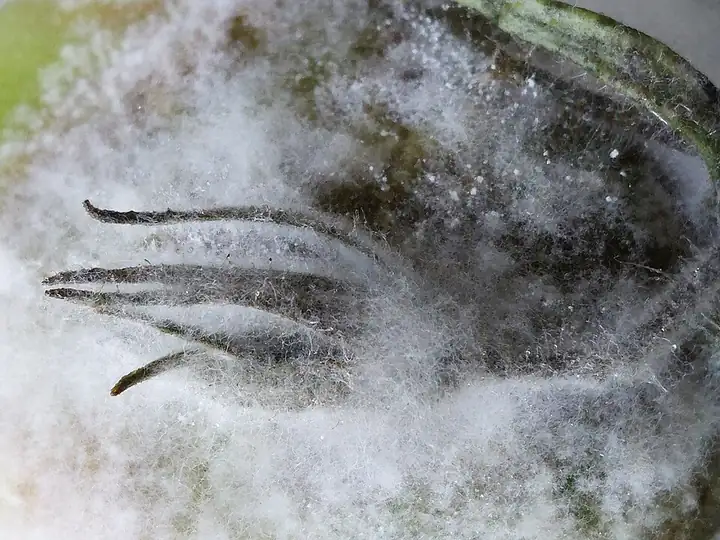
White mold
Fungus (Sclerotinia sclerotiorum)
| Type | Fungus |
|---|---|
| Cause | Fungus (Sclerotinia sclerotiorum) |
| When | Cool, wet periods, especially once plants bloom and the canopy closes. |
About
White mold infects more than 400 kinds of plants, including beans, tomatoes, squash, cabbage, lettuce and many flowers. Its hard black resting bodies survive in soil for five years or more.
Also called white mold, Sclerotinia stem rot
How to recognize it
Symptoms
Stems, pods or leaves get water-soaked spots that turn pale or bleached, and all the leaves on the affected stem wilt and die. In humid weather a fluffy white growth covers the rot, and hard black sclerotia about the size of a broken pencil tip form on or inside stems.
Often confused with
Southern blight also makes white growth at the stem base, but its sclerotia are small, round and tan to brown like mustard seeds and it strikes in hot weather. Gray mold's growth is gray and powdery.
Worse when
Cool (about 51 to 68°F), moist conditions, dense plant canopies, and leaves or blossoms that stay wet for two to three days.
How it spreads
Sclerotia in the top couple of inches of soil sprout tiny mushroom-like cups that shoot spores, which can drift a mile or more; spores usually infect through old blossoms.
When
Cool, wet periods, especially once plants bloom and the canopy closes.
What to do, gentlest first
Prevention works best; most sprays only protect healthy leaves and can't cure infected ones. Always read and follow the product label.
Rotate with grasses and corn Prevent
Keep susceptible crops out of infested ground for at least two to three years, planting corn or grains, which do not get white mold.
Space plants and use drip Prevent
Give plants room to dry, choose open, upright bean varieties, use drip irrigation, avoid extra nitrogen and control weeds such as ragweed.
Remove infected plants early By hand
Pull and destroy infected plants and debris as soon as you see them, before sclerotia drop into the soil.
Do not compost unless the pile reaches 148 to 158°F for at least 21 days (UMN).
Sclerotia-attacking fungus Natural enemies
Cornell notes a biological soil product containing a fungus that parasitizes sclerotia is approved for organic growing.
Follow the label.
Fungicides at bloom (mainly farm use) Conventional spray
Cornell says farm fungicides for beans are applied at early bloom with thorough coverage; home options are limited, so prevention matters most.
Follow the label, including which crops it may be used on and how many days to wait before harvest.
Plants it affects
Broccoli, Cabbage, Caraway, Carrot, Cauliflower, Chickpea, Chilacayote, Cucumber, Dry beans (pinto, black, kidney, navy), Eggplant, Endive and escarole, Fava bean, Green beans (snap beans), Hardy kiwi (kiwiberry), Lentil, Lettuce, Marigold, Peas, Pepper (sweet and chili), Scarlet runner bean, Tomato, Winter squash and pumpkin, Yacon, Zinnia, Zucchini and summer squash
Sources
Photo: Photo: Josef Schlaghecken, CC BY 4.0, via Wikimedia Commons (CC BY 4.0). Photo resized for the web.

Planting dates and advice are general guidance; check with your local Cooperative Extension office for your area.