
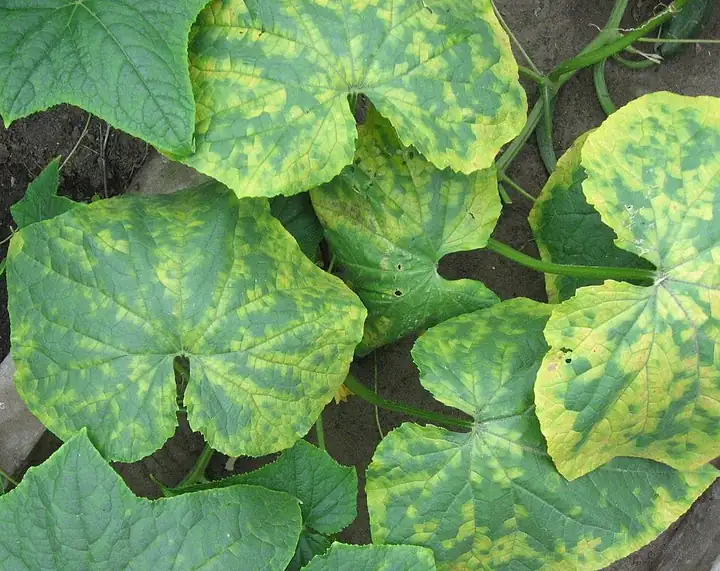
Mosaic viruses
Several viruses, including cucumber mosaic virus (CMV), watermelon mosaic, zucchini yellow mosaic, squash mosaic, tobacco and tomato mosaic, bean common and yellow mosaic, and pea enation mosaic
| Type | Virus |
|---|---|
| Cause | Several viruses, including cucumber mosaic virus (CMV), watermelon mosaic, zucchini yellow mosaic, squash mosaic, tobacco and tomato mosaic, bean common and yellow mosaic, and pea enation mosaic |
| When | Spring through fall, whenever aphids or other carriers are active. |
About
Mosaic viruses cause mottled, distorted leaves and misshapen fruit on many vegetables, flowers and weeds; cucumber mosaic virus alone infects over 1,200 plant species. None can be cured, so prevention is everything.
Also called cucumber mosaic virus, cucurbit viruses, bean viruses, pea enation mosaic, mosaic virus
How to recognize it
Symptoms
Leaves show a patchwork of light and dark green or yellow, and may pucker, cup, curl or become narrow and stringy. Plants are often stunted. Fruit can be small, warty, mottled or ringed; peas with enation mosaic get small blisters on leaves and pods.
Often confused with
Herbicide drift, nutrient shortages and mite feeding can also distort or mottle leaves. Only a lab test identifies a virus for certain.
Worse when
Busy aphid populations (and cucumber beetles for squash mosaic), plus perennial weeds, alfalfa or clover nearby that carry viruses.
How it spreads
Most are spread by aphids feeding briefly; squash mosaic moves with cucumber beetles and on seed, some bean and pea viruses are seedborne, and tobacco and tomato mosaic spread on hands, tools and tobacco products; many overwinter in weeds and perennial plants.
When
Spring through fall, whenever aphids or other carriers are active.
What to do, gentlest first
Prevention works best; most sprays only protect healthy leaves and can't cure infected ones. Always read and follow the product label.
Resistant varieties and clean seed Prevent
Choose varieties resistant to the virus you face (for tomato, look for T/TMV or ToMV on the label) and buy certified virus-free seed and plants. WSU lists virus-resistant pea varieties.
Control weeds and keep distance from alfalfa Prevent
Clear perennial and broadleaf weeds that shelter viruses, and avoid planting peas and beans next to alfalfa or clover.
Pull infected plants and wash up By hand
Pull and destroy plants with symptoms (UMN advises not composting them). Wash hands with soap and water before handling plants, especially if you use tobacco.
Row covers and reflective mulch Barrier
Floating row covers keep aphids off young plants, and silver reflective mulch can delay infection by repelling aphids.
Remove covers from squash and melons at bloom so pollinators can reach the flowers.
Do not rely on insecticides Organic spray
Insecticides act too slowly to stop aphids from passing these viruses. Wisconsin advises against spraying for this reason, and UMN says no pesticide can reverse symptoms.
Plants it affects
Amaryllis, Beet, Black raspberry (blackcap), Calendula (pot marigold), Canna, Cantaloupe (muskmelon), Chickpea, Chilacayote, Cucumber, Cymbidium orchid, Dahlia, Dendrobium orchid, Gladiolus, Green beans (snap beans), Ground cherry, Iris, Lentil, Lettuce, Lily (Lilium), Luffa (loofah gourd), Peas, Pepper (sweet and chili), Petunia, Scarlet runner bean, Southern peas, Spinach, Stock, Tomatillo, Tomato, Tulip, Watermelon, Winter squash and pumpkin, Zucchini and summer squash
Sources
- hort.extension.wisc.edu
- extension.umn.edu
- extension.umn.edu
- ipm.ucanr.edu
- hortsense.cahnrs.wsu.edu
- hgic.clemson.edu
- hgic.clemson.edu
Photo: Photo: DieterO, Public domain, via Wikimedia Commons. Photo resized for the web.

Planting dates and advice are general guidance; check with your local Cooperative Extension office for your area.