
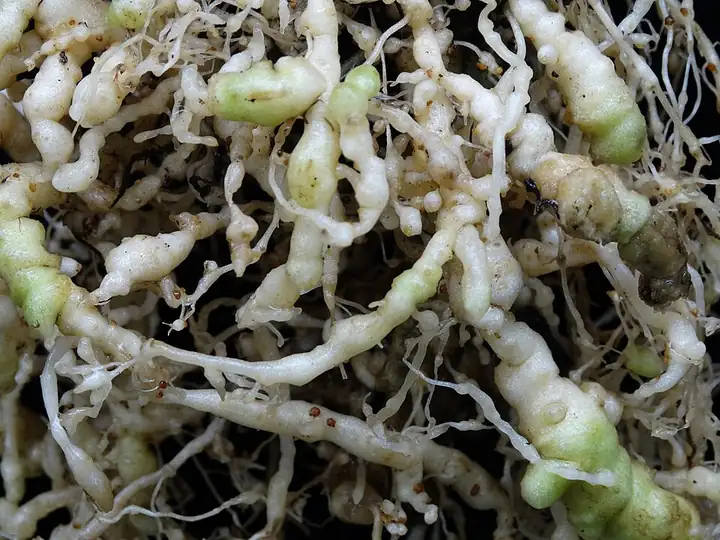
Root-knot nematodes
Meloidogyne species
| Type | Nematode (microscopic worm) |
|---|---|
| When | Summer, when soil is warm. |
| Pressure by region | High pressure: Southeast |
About
Microscopic roundworms that live in soil and feed on root cells with needle-like mouthparts. They are the most damaging nematodes in home gardens.
Spotting it
Damage
Plants are stunted and yellow and wilt in the heat even when watered. Roots have knobby swellings (galls).
How to find it early
Dig up a struggling plant and look for galls on the roots. A lab test of soil or roots confirms it.
When
Summer, when soil is warm.
Life cycle
They build up fastest in warm, irrigated, sandy soils with long growing seasons. Freezing winters limit their survival but do not wipe them out.
What to do, gentlest first
Start at the top. Sprays are a last step; always read and follow the product label.
Resistant varieties Prevent
Choose tomatoes marked 'N' or 'VFN' (such as 'Celebrity'), resistant peppers such as 'Charleston Belle', and resistant rootstocks for peaches and grapes.
Rotate and clean up Prevent
Grow non-hosts such as asparagus, corn, onions and garlic in the spot for three years. Pull out roots after harvest and add organic matter.
Solarize the soil Prevent
In the hottest part of summer, cover moist, tilled soil with clear plastic for 4 to 6 weeks; it temporarily reduces nematodes in the top foot of soil.
French marigold cover crop Natural enemies
Plant French marigolds such as 'Tangerine' as a solid block, no more than 7 inches apart, for at least two months, then turn them under.
A few marigolds tucked between tomatoes will not do this; it takes a solid planting.
No home nematicides Conventional spray
UC IPM says no chemical nematicides or soil fumigants are available to home gardeners, so rely on the steps above.
Plants it goes after
Barbados cherry (acerola), Cantaloupe (muskmelon), Celosia, Chayote, Cucumber, Eggplant, Fava bean, Fig, Forsythia, Gardenia (cape jasmine), Ginger, Grape, Green beans (snap beans), Guava, Hardy kiwi (kiwiberry), Hops, Hosta (plantain lily), Jaboticaba, Okra, Ornamental sweet potato vine, Papaya, Passion fruit, Peach, Pepper (sweet and chili), Pineapple, Roselle (Florida cranberry), Rutabaga, Southern peas, Sweet potato, Tamarind, Tomato, Turmeric, Watermelon
Pressure by region
Worst in warm zones with sandy soil, such as South Carolina's Coastal Plain and California's warm, irrigated sandy soils; Missouri notes that freezing winters limit survival. In Hawaii, CTAHR says root-knot nematodes commonly infest farm fields, and UH Master Gardeners suggest French marigold or sunn hemp cover crops and resistant varieties. Other regions are rated low for lack of a source, so those ratings are estimates.
| Northeast | Low |
|---|---|
| Southeast | High pressure |
| South Central | Moderate |
| Midwest | Low |
| Great Plains | Low |
| Mountain West | Low |
| Southwest | Low |
| Pacific Northwest | Low |
| California | Moderate |
| Alaska | Low |
| Hawaii | Moderate |
Ratings come from extension sources where available; some are estimates, as noted above.
Sources
Photo: Photo: Scot Nelson, CC0, via Wikimedia Commons (CC0). Photo resized for the web.

Planting dates and advice are general guidance; check with your local Cooperative Extension office for your area.