
Leafminers
Spinach leafminer (Pegomya hyoscyami) and vegetable leafminer (Liriomyza sativae), among others
| Type | Insect |
|---|---|
| When | Spring through fall. |
| Pressure by region | Low: all regions |
About
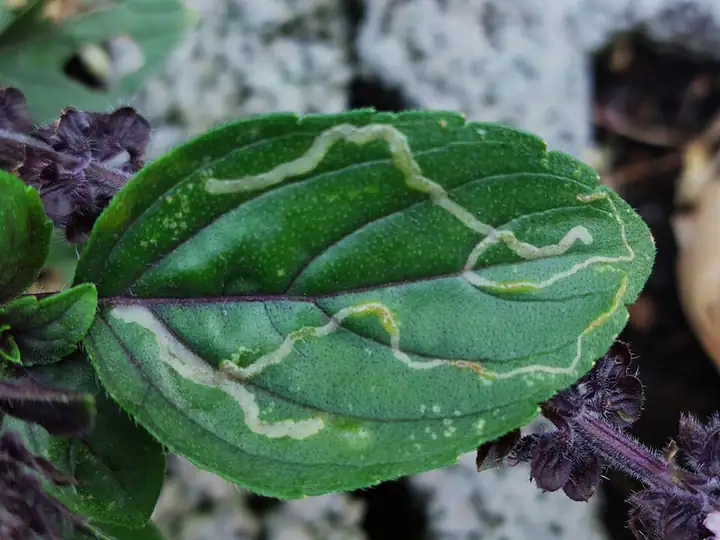
Leafminers are the larvae of small flies that feed inside leaves, between the upper and lower surfaces. The spinach leafminer makes blotches; the vegetable leafminer makes winding, snake-like trails.
Spotting it
Damage
Pale, winding or blotchy mines appear in leaves and later turn brown. It rarely hurts plant growth but can ruin greens such as spinach and chard.
How to find it early
Check seedlings for small pale trails or blotches in the leaves.
When
Spring through fall.
Life cycle
Both species overwinter as pupae in the soil. They have several generations a year.
What to do, gentlest first
Start at the top. Sprays are a last step; always read and follow the product label.
Weed and till Prevent
Remove lambsquarters and other host weeds, and till after harvest to destroy pupae in the soil.
Floating row cover Barrier
Cover spinach, chard and beets from seeding.
Works only where there was no infestation last year, since flies can emerge from the soil under the cover.
Spinosad Organic spray
Spinosad gives effective, low-impact control.
UMN notes it has little impact on natural enemies, but it is toxic to bees while wet: spray in the evening, keep it off open flowers, and follow the label and pre-harvest interval.
Broad-spectrum insecticides Conventional spray
They last longer but are seldom worth it for leafminers.
They kill the beneficial insects that keep leafminers down, and many are highly toxic to bees. Follow the label and pre-harvest interval.
Plants it goes after
Amaranth (greens), Aster, Beet, Black gum (tupelo), Columbine, Cucumber, Delphinium, Deutzia, Eggplant, Epazote, Gerbera daisy, Green beans (snap beans), Hellebore (Lenten rose), Lettuce, Lilac, Lovage, Luffa (loofah gourd), Mâche (corn salad), Mock orange, Monkshood, Morning glory, Nasturtium, Oaks (white, red and pin oak), Onion, Peas, Pepper (sweet and chili), Petunia, Potato, Red twig dogwood, River birch, Serviceberry (juneberry, saskatoon), Shasta daisy, Snapdragon, Spinach, Swiss chard, Thornless honeylocust, Tomato, Verbena (garden verbena), Watermelon, Witch hazel, Yacon, Zucchini and summer squash
Pressure by region
Rated low everywhere because UMN notes mining rarely affects plant growth; greens growers may find it more than a nuisance. Hawaii lists bean fly, serpentine and vegetable leafminers among home-garden pests (CTAHR).
| Northeast | Low |
|---|---|
| Southeast | Low |
| South Central | Low |
| Midwest | Low |
| Great Plains | Low |
| Mountain West | Low |
| Southwest | Low |
| Pacific Northwest | Low |
| California | Low |
| Alaska | Low |
| Hawaii | Low |
Ratings come from extension sources where available; some are estimates, as noted above.
Sources
Photo: Photo: Schlaghecken Josef, CC BY-SA 4.0, via Wikimedia Commons (CC BY-SA 4.0). Photo resized for the web.

Planting dates and advice are general guidance; check with your local Cooperative Extension office for your area.