
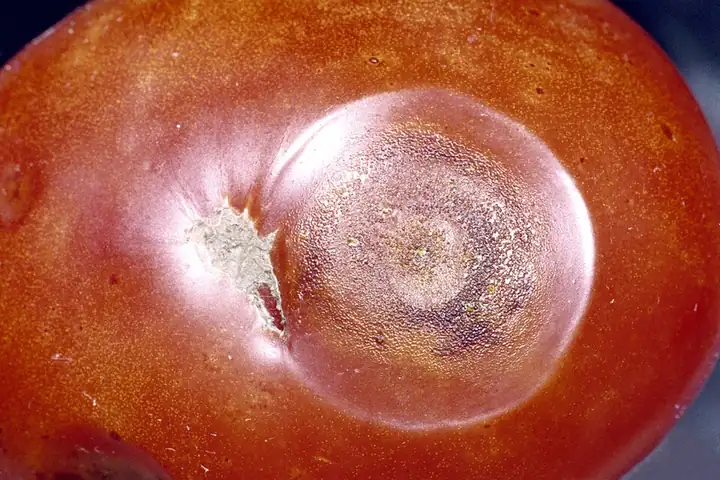
Anthracnose
Fungi in the genus Colletotrichum (C. orbiculare on cucurbits; C. acutatum, C. gloeosporioides and C. scovillei on pepper; related species on tomato and strawberry)
| Type | Fungus |
|---|---|
| Cause | Fungi in the genus Colletotrichum (C. orbiculare on cucurbits; C. acutatum, C. gloeosporioides and C. scovillei on pepper; related species on tomato and strawberry) |
| When | Mid to late season in warm, wet weather. |
About
Anthracnose causes sunken, rotting spots on the fruit of cucurbits, peppers, tomatoes and strawberries, and leaf spots on cucurbits. It thrives in warm, rainy weather and can ruin fruit right before harvest.
Also called anthracnose, anthracnose fruit rot
How to recognize it
Symptoms
Fruit gets round, sunken spots, often with rings, that ooze salmon-pink to orange spore masses in wet weather, then rot. On cucurbits, leaves get irregular brown spots (smaller and black on watermelon) whose centers can drop out, and cucumber and melon stems get long sunken lesions.
Often confused with
Other fruit rots may be soft or fuzzy, but anthracnose's sunken spots with salmon-colored spore masses are distinctive.
Worse when
Warm (around 80°F), wet weather with frequent rain or overhead watering.
How it spreads
Spores splash from infected debris, soil and fruit in rain or irrigation and travel on hands and tools; the fungi survive in plant debris and on seed.
When
Mid to late season in warm, wet weather.
What to do, gentlest first
Prevention works best; most sprays only protect healthy leaves and can't cure infected ones. Always read and follow the product label.
Clean seed and resistant varieties Prevent
Buy certified or pathogen-free seed. Some anthracnose-resistant cucumber varieties are available.
Rotate Prevent
Keep cucurbits out of the same spot for three years, and rotate peppers two to three years.
Drip irrigation Prevent
Water at the soil with drip instead of sprinklers, and stay out of the garden while plants are wet.
Pick off infected fruit and clean up By hand
Remove rotting fruit right away, harvest promptly, pull and destroy badly infected vines, and clean tools.
Copper Organic spray
NC State suggests copper as a preventive on peppers, and Clemson lists it for cucurbits when disease is severe.
Copper only protects leaves it coats before infection; it will not heal spots already there. It can burn young leaves, especially in weather above 85°F, and some plants are sensitive (Purdue lists celery, strawberry, apple, pear and plum among them). PNW 591 rates copper hydroxide toxic to bees, so spray when bees are not foraging. Follow the label, including the days to wait before harvest.
Chlorothalonil Conventional spray
Clemson lists chlorothalonil for cucurbit anthracnose. It protects healthy leaves and fruit; it will not cure rotting fruit.
Chlorothalonil is a protectant: it keeps new infections from starting but does not cure existing spots. UC IPM rates it highly hazardous to fish and other aquatic life, and product labels carry a DANGER signal word. Keep it out of water and off flowering plants, wear gloves and eye protection, and follow the label and pre-harvest interval.
Plants it affects
Avocado, Barbados cherry (acerola), Bayberry and wax myrtle, Black raspberry (blackcap), Blackberry, Buckeye, Cantaloupe (muskmelon), Caraway, Cucumber, Currant, Dry beans (pinto, black, kidney, navy), Gerbera daisy, Gooseberry, Ground cherry, Guava, Hollyhock, Hosta (plantain lily), Hydrangea, Japanese barberry, Japanese maple, Lentil, Lima beans, Linden, Liriope (lilyturf, monkey grass), Loquat, Loropetalum, Lychee, Mamey sapote, Mango, Money tree, Natal plum (carissa), Oaks (white, red and pin oak), Olive, Pansy and viola, Papaya, Passion fruit, Pear, Pepper (sweet and chili), Pineapple guava (feijoa), Pomegranate, Rutabaga, Scarlet runner bean, Snapdragon, Sorghum (sweet and grain), Starfruit (carambola), Strawberry, Sugar maple, Surinam cherry, Tomatillo, Tomato, Tuberose, Watermelon, Winter squash and pumpkin, Zucchini and summer squash
Sources
Photo: Photo: Clemson University - USDA Cooperative Extension Slide Series, Public domain (USDA), via Wikimedia Commons. Photo resized for the web.

Planting dates and advice are general guidance; check with your local Cooperative Extension office for your area.