
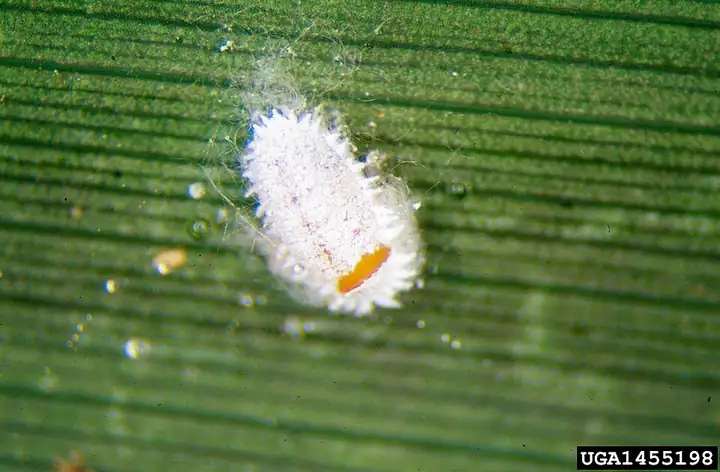
Mealybugs
Several species. Citrus mealybug (Planococcus citri) is the most common one on citrus; kin include longtailed mealybug (Pseudococcus longispinus), obscure mealybug, and on grapes the grape mealybug (Pseudococcus maritimus) and vine mealybug (Planococcus ficus).
| Type | Insect |
|---|---|
| Pressure by region | High pressure: California |
About
Mealybugs are soft, oval, sap-sucking insects covered in white, powdery wax, so a colony looks like bits of cotton tucked into the plant. Citrus is the host where UC IPM says they cause the most trouble, and they are a classic pest of potted plants and houseplants indoors.
Spotting it
Damage
They suck sap and weaken the plant, and they drip sticky honeydew that grows black sooty mold. Heavy numbers cause yellowed, distorted leaves and leaf drop; on citrus, feeding at the fruit stem can make fruit drop.
How to find it early
Look for white cottony tufts, sticky leaves, black sooty mold and ants running up the trunk. Check hidden spots: where leaves or fruits touch, branch crotches, the fruit stem end, stems near the soil, and the pot rim.
When
Year-round indoors and where winters are warm; on outdoor citrus, damage is worst in spring and fall (UC IPM).
Life cycle
A female lays a few hundred eggs in a cottony egg sac (UF/IFAS: 300 to 600 for citrus mealybug), and there are two to six overlapping generations a year depending on species and climate. Indoors and in warm climates every stage can be present all year; on leafless plants they spend winter as eggs or tiny young under bark.
What to do, gentlest first
Start at the top. Sprays are a last step; always read and follow the product label.
Check plants before they come in Prevent
Look over new plants, pots and stakes for cottony egg sacs before you buy or bring them home, and look again before a porch tree moves indoors for winter. Skip heavy nitrogen feeding, which UC IPM says pushes tender growth and more mealybug eggs.
UC IPM suggests throwing out a badly infested houseplant rather than treating it over and over.
Wash, swab and prune By hand
On sturdy plants, blast colonies off with a strong spray of water every few days. Dab small groups with a cotton swab dipped in rubbing alcohol (70% or weaker), and cut off badly infested twigs.
Test alcohol on a few leaves and wait a day or two for burn before treating the whole plant (UC IPM).
Protect natural enemies and keep ants off Natural enemies
Outdoors, tiny parasitic wasps, lacewings and the mealybug destroyer lady beetle (Cryptolaemus) keep mealybugs down. Ants guard mealybugs from these helpers, so stop ants with sticky bands on the trunk or ant baits. Mealybug destroyers can be bought and released when egg sacs are plentiful.
The mealybug destroyer does not survive cold winters (UC IPM). Broad-spectrum sprays kill the helpers.
Insecticidal soap, horticultural oil or neem oil Organic spray
These kill only the mealybugs they touch and work best on young, less waxy ones, so wet the colonies well and repeat as needed (UC IPM).
Test on a few leaves first. Oil is toxic to bees for under 3 hours and neem for under 2 hours after spraying (PNW 591), so spray a flowering citrus in the evening or when bees are not visiting. Follow the label.
Systemic dinotefuran or imidacloprid, as a last resort Conventional spray
UC IPM says these may reduce mealybugs on some landscape plants and houseplants, but they are not reliable against mealybugs.
UC IPM advises avoiding them when possible, especially on flowering plants, to protect pollinators and natural enemies; PNW 591 rates both highly toxic to bees. On citrus, grapes, figs or herbs you will eat, use only a product whose label names that crop, and follow its pre-harvest interval.
Garden friends that go after it
Brown lacewings, Green lacewings, Lady beetles (ladybugs), Snakeflies
Protect these helpers: skip broad sprays when they're around.
Plants it goes after
African violet, Agave (century plant), Air plants (tillandsia), Aloe vera, Amaryllis, Anthurium (flamingo flower), Arborvitae, Areca palm, Arrowhead vine (syngonium), Asparagus fern, Azalea, Bachelor's button (cornflower), Banana (dwarf), Begonia, Bird of paradise, Bird's nest fern, Boston fern, Bromeliads, Buffalograss, Calamondin, Cherimoya, Chinese evergreen, Christmas cactus, Clivia (bush lily), Coleus, Coral bells (heuchera), Croton, Crown of thorns, Cuphea (cigar plant and kin), Cyclamen (florist's), Cymbidium orchid, Dendrobium orchid, Dieffenbachia (dumb cane), Dracaena (corn plant, dragon tree), Dragon fruit (pitaya), Elephant ear, English ivy (houseplant), Fiddle-leaf fig, Fig, Finger lime, Foxglove, Gardenia (cape jasmine), Geranium (annual, Pelargonium), Gladiolus, Grape, Guava, Heartleaf philodendron, Hoya (wax plant), Impatiens, Inch plant (wandering dude), Jaboticaba, Jade plant, Kalanchoe, Kumquat, Lemon, Lime (key and Persian), Lucky bamboo, Lychee, Maidenhair fern, Makrut lime, Mandarin (satsuma, clementine, tangerine), Mandevilla, Mango, Meyer lemon, Miracle fruit, Money tree, Monstera (Swiss cheese plant), Moth orchid, Nerve plant (fittonia), Nopal and prickly pear (Opuntia), Oleander, Orange and blood orange, Parlor palm, Peace lily, Peperomia, Pilea (Chinese money plant), Pineapple, Pineapple sage, Poinsettia, Polka dot plant, Pomegranate, Ponytail palm, Portulaca (moss rose), Pothos, Prayer plants (calathea, maranta), Purple heart, Rosemary, Rubber plant, Sage, Salvia (ornamental sage), Sedges (Carex), Sedum (stonecrop), Snake plant, Spider plant, String of hearts, String of pearls, Succulents (echeveria, haworthia, sedum), Swedish ivy, Tamarind, Tropical hibiscus, Tropical pitcher plant (nepenthes), Umbrella plant (schefflera), White sapote, Yacon, Yew, Yucca cane, ZZ plant
Pressure by region
Outdoors they are worst on citrus in warm areas; UC IPM covers California and UF/IFAS says citrus mealybug is found in 16 or more states and attacks Florida citrus mostly in spring and summer. In cold-winter areas they mainly show up on houseplants and potted plants kept indoors, where there are no natural enemies, so a porch tree brought in for winter can still get them. Ratings other than California and the Southeast are estimates.
| Northeast | Low |
|---|---|
| Southeast | Moderate |
| South Central | Moderate |
| Midwest | Low |
| Great Plains | Low |
| Mountain West | Low |
| Southwest | Moderate |
| Pacific Northwest | Low |
| California | High pressure |
| Alaska | Low |
| Hawaii | Moderate |
Ratings come from extension sources where available; some are estimates, as noted above.
Sources
Photo: Photo: Whitney Cranshaw, Colorado State University, Bugwood.org, CC BY 3.0, via Wikimedia Commons (CC BY 3.0). Photo resized for the web.

Planting dates and advice are general guidance; check with your local Cooperative Extension office for your area.