
Slugs
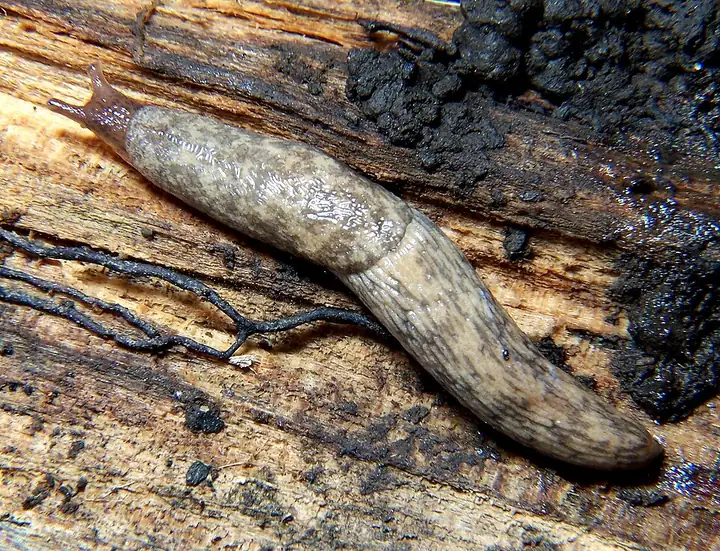
Gray garden slug, also called gray field slug (Deroceras reticulatum), and other species
| Type | Slug or snail |
|---|---|
| When | Cool, damp weather in spring and fall; year-round where winters are mild. |
| Pressure by region | High pressure: Pacific Northwest, Hawaii |
About
Slugs are soft, legless mollusks that leave silvery slime trails. Without a shell to hold in moisture, they feed at night and on dull, wet days and hide under boards, pots and mulch by day.
Spotting it
Damage
Irregular holes with smooth edges appear in leaves, fruit and flowers, and soft seedlings can vanish overnight. Slugs rarely bother plants growing in full sun.
How to find it early
Damage that appears overnight with no insect in sight is the clue. Go out with a flashlight an hour after dark or on a drizzly day and look on the leaves.
When
Cool, damp weather in spring and fall; year-round where winters are mild.
Life cycle
A gray garden slug lays clusters of about 40 eggs, more than 500 in its life, mostly in fall after the first rains; adults live 6 to 12 months. Mild climates can have two generations a year, with eggs and adults overwintering under debris and mulch.
What to do, gentlest first
Start at the top. Sprays are a last step; always read and follow the product label.
Make the garden less damp Prevent
Water at the base of plants in the morning, use drip irrigation, keep mulch thin near seedlings, and remove boards, pots and debris where slugs hide.
Flashlight hand-picking and board traps By hand
Pick slugs at night, or set boards on the soil and collect the slugs hiding under them each morning.
In Hawaii never touch slugs or snails bare-handed; use gloves or tongs because of rat lungworm (CTAHR).
Beer traps By hand
Sink containers of beer or a yeast-and-sugar mix to ground level and empty them daily.
Copper bands Barrier
Ring beds with a copper band 4 to 6 inches wide, buried an inch into the soil.
Results vary. Diatomaceous earth stops working once damp, and crushed eggshells and coffee grounds have not been shown to work; salt damages soil.
Welcome predators Natural enemies
Toads and ground beetles eat slugs, and ducks or chickens can clear a bed if seedlings are protected.
Iron phosphate bait Organic spray
Scatter pellets thinly near hiding spots in the evening, not in piles. Water lightly first to get slugs moving.
Iron phosphate is the safer choice around dogs, children and wildlife (UC IPM), but still follow the label and keep pets from eating the bait. All slug baits also kill harmless native snails.
Metaldehyde bait (avoid where pets or children could reach it) Conventional spray
Metaldehyde kills slugs fast, but safer baits exist.
Metaldehyde is very poisonous to dogs and cats, and the pellets attract dogs; signs can start within minutes to three hours after a dog eats it (NPIC). UC IPM says not to use it where children or pets could encounter it. Use iron phosphate instead; if you do use it, read and follow the label, store bait out of reach, and call a vet at once if a pet eats it.
Garden friends that go after it
Centipedes, Fireflies (lightning bugs), Ground beetles, Harvestmen (daddy longlegs)
Protect these helpers: skip broad sprays when they're around.
Plants it goes after
Agave (century plant), Amaryllis, Anemone (windflower), Asparagus fern, Baby's breath, Basil, Begonia, Bird's nest fern, Black-eyed Susan, Bleeding heart, Broccoli, Broccoli raab (rapini), Brunnera (Siberian bugloss), Cabbage, Caladium (angel wings), Calendula (pot marigold), Canna, Cardinal flower, Cardoon, Celandine poppy (wood poppy), Celery, Celosia, Chervil, Clematis, Cucamelon, Cucumber, Daffodil, Daylily, Delphinium, Dianthus (pinks, sweet William, carnation), Dragon fruit (pitaya), Dusty miller, Fennel, Geranium (annual, Pelargonium), Great blue lobelia, Hellebore (Lenten rose), Hepatica, Hollyhock, Hosta (plantain lily), Impatiens, Iris, Jerusalem artichoke (sunchoke), Larkspur (annual larkspur), Leek, Lettuce, Lily (Lilium), Liriope (lilyturf, monkey grass), Lungwort (Pulmonaria), Lupine (and Texas bluebonnet), Mâche (corn salad), Mexican mint marigold (Texas tarragon), Mexican sunflower (tithonia), Mizuna, Napa cabbage, Nerve plant (fittonia), Ornamental kale and cabbage, Pansy and viola, Pepper (sweet and chili), Perilla (shiso), Petunia, Poppy (Oriental, Iceland, corn and breadseed poppies), Portulaca (moss rose), Potato, Primrose, Radicchio, Rutabaga, Salsify (oyster plant), Scarlet runner bean, Sedges (Carex), Sedum (stonecrop), Shasta daisy, Solomon's seal, Spinach, Statice (annual statice), Strawberry, Strawflower, Sweet pea, Swiss chard, Tomato, Trillium, Tulip, Twinleaf, Verbena (garden verbena), Virginia bluebells, Wild geranium (spotted cranesbill), Wild ginger, Yacon
Pressure by region
Slugs follow moisture more than temperature, so cool, wet springs bring the most. In Alaska the gray garden slug has long been established south of the Alaska Range and has recently spread into Fairbanks gardens. In Hawaii slugs and snails, especially the semi-slug, can carry rat lungworm, a parasite dangerous to people and pets. Drier regions are rated low for lack of a regional source, so those ratings are estimates.
| Northeast | Moderate |
|---|---|
| Southeast | Moderate |
| South Central | Low |
| Midwest | Moderate |
| Great Plains | Low |
| Mountain West | Low |
| Southwest | Low |
| Pacific Northwest | High pressure |
| California | Moderate |
| Alaska | Moderate |
| Hawaii | High pressure |
Ratings come from extension sources where available; some are estimates, as noted above.
Sources
Photo: Photo: Bruce Marlin, CC BY-SA 3.0, via Wikimedia Commons (CC BY-SA 3.0). Photo resized for the web.

Planting dates and advice are general guidance; check with your local Cooperative Extension office for your area.